
The Assessment of Cinnamon (Cinnamomum spp.) Aqueous and Ethanolic Extracts' Antibacterial Properties against Antibiotic-Resistant Staphylococcus Species
DOI:
https://doi.org/10.33003/fjs-2026-1017-5890Keywords:
Cinnamon, Cinnamomum spp., Staphylococcus aureus, Antibiotic resistance, Ethanolic extract, Aqueous extract, Antibacterial propertiesAbstract
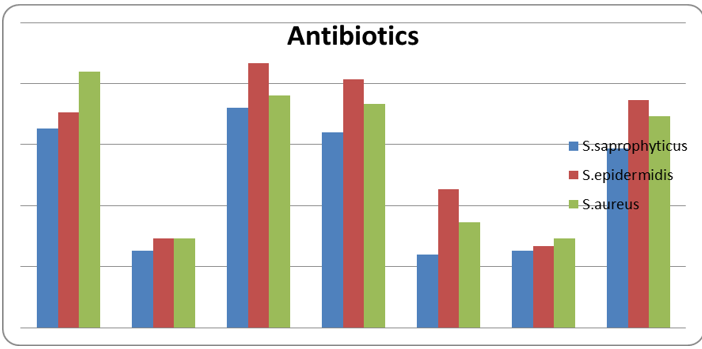
The increasing prevalence of antibiotic-resistant bacteria has encouraged research into natural antimicrobial agents derived from medicinal plants. This study evaluated the antibacterial activity of ethanolic and aqueous extracts of cinnamon (Cinnamomum spp.) against three Staphylococcus species: Staphylococcus saprophyticus, Staphylococcus epidermidis, and Staphylococcus aureus. The antibacterial activity was assessed using the disc diffusion method at concentrations of 50, 100, 200, and 400 mg/mL. The sensitivity of the bacterial isolates to several commonly used antibiotics was also investigated. The results showed that the ethanolic extract had a stronger antibacterial effect than the aqueous extract, with activity increasing as the concentration increased. At 400 mg/mL, the ethanolic extract produced inhibition zones of 12.00 ± 2.65 mm against S. saprophyticus, 12.67 ± 2.08 mm against S. epidermidis, and 12.33 ± 1.53 mm against S. aureus. In comparison, the aqueous extract showed lower activity, producing inhibition zones of 6.67 ± 0.58 mm against S. saprophyticus and 7.33 ± 0.58 mm against S. epidermidis. The ethanolic extract showed no inhibitory activity against S. saprophyticus at 50 mg/mL, while only limited activity was observed against S. epidermidis and S. aureus. The aqueous extract showed no inhibitory effect against any of the tested Staphylococcus strains at 50 and 100 mg/mL. The greater effectiveness of the ethanolic extract may be attributed to ethanol’s ability to extract lipophilic and phenolic compounds, particularly cinnamaldehyde and eugenol. Overall, cinnamon extract may serve as a potential natural antibacterial agent against antibiotic-resistant Staphylococcus species.
References
1. World Health Organization. (2023). Antimicrobial resistance. World Health Organization.https://www.who.int/news-room/fact-sheets/detail/antimicrobial-resistance
2. Vasconcelos, N. G., Croda, J., & Simionatto, S. (2018). Antibacterial mechanisms of cinnamon and its constituents: A review. Microbial Pathogenesis, 120, 198–203. https://doi.org/10.1016/j.micpath.2018.04.036
3. Doyle, A. A., & Stephens, J. C. (2019). A review of cinnamaldehyde and its derivatives as antibacterial agents. Fitoterapia, 139, 104405. https://doi.org/10.1016/j.fitote.2019.104405
4. Nabavi, S. F., Di Lorenzo, A., Izadi, M., Sobarzo-Sánchez, E., Daglia, M., & Nabavi, S. M. (2015). Antibacterial effects of cinnamon: From farm to food, cosmetic and pharmaceutical industries. Nutrients, 7(9), 7729–7748. https://doi.org/10.3390/nu7095359
5. Rao, P. V., & Gan, S. H. (2014). Cinnamon: A multifaceted medicinal plant. Evidence-Based Complementary and Alternative Medicine, 2014, 642942. https://doi.org/10.1155/2014/642942
6. Burt, S. (2004). Essential oils: Their antibacterial properties and potential applications in foods—A review. International Journal of Food Microbiology, 94(3), 223–253. https://doi.org/10.1016/j.ijfoodmicro.2004.03.022
7. Ooi, L. S. M., Li, Y., Kam, S. L., Wang, H., Wong, E. Y. L., & Ooi, V. E. C. (2006). Antimicrobial activities of cinnamon oil and cinnamaldehyde from the Chinese medicinal herb Cinnamomum cassia Blume. The American Journal of Chinese Medicine, 34(3), 511–522. https://doi.org/10.1142/S0192415X06004041
8. Shan, B., Cai, Y. Z., Brooks, J. D., & Corke, H. (2007). Antibacterial properties and major bioactive components of cinnamon stick (Cinnamomum burmannii): Activity against foodborne pathogenic bacteria. Journal of Agricultural and Food Chemistry, 55(14), 5484–5490. https://doi.org/10.1021/jf070424d
9. Otto, M. (2009). Staphylococcus epidermidis—The accidental pathogen. Nature Reviews Microbiology, 7(8), 555–567. https://doi.org/10.1038/nrmicro2182
10. Tong, S. Y. C., Davis, J. S., Eichenberger, E., Holland, T. L., & Fowler, V. G., Jr. (2015). Staphylococcus aureus infections: Epidemiology, pathophysiology, clinical manifestations, and management. Clinical Microbiology Reviews, 28(3), 603–661. https://doi.org/10.1128/CMR.00134-14
11. Clinical and Laboratory Standards Institute. (2023). Performance standards for antimicrobial susceptibility testing (33rd ed., CLSI supplement M100). Clinical and Laboratory Standards Institute.
12. Shu, C., Ge, L., Li, Z., Chen, B., Liao, S., Lu, L., Wu, Q., Jiang, X., An, Y., Wang, Z., & Qu, M. (2024). Antibacterial activity of cinnamon essential oil and its main component cinnamaldehyde and the underlying mechanism. Frontiers in Pharmacology, 15, 1378434. https://doi.org/10.3389/fphar.2024.1378434
13. Nematollahi, Z., Ebrahimi, M., Raeisi, M., Dadban Shahamat, Y., Ghodsi Moghadam, M., & Hashemi, M. (2020). The antibacterial activity of cinnamon essential oil against foodborne bacteria: A mini-review. Journal of Human, Environment, and Health Promotion, 6(3), 1–8. https://doi.org/10.29252/jhehp.6.3.1
14. Mohammad, N., Saleem, S., Balata, R., & Salih, D. (2022). Antibacterial activities of plant extract Cinnamomum zeylanicum bark against multidrug-resistant bacteria. Iraqi Journal of Pharmaceutical Sciences, 18(2), 10–21. https://doi.org/10.33899/iphr.2022.170393
15. Dai, Y., Gultekinoglu, M., Bayram, C., De Silva, H. B., & Edirisinghe, M. (2024). Antibacterial properties of natural cinnamon-alginate fibrous patches produced by modified nozzle-pressurized spinning. MedComm, 5, e731. https://doi.org/10.1002/mco2.731
16. Jaramillo Jimenez, B. A., Awwad, F., & Desgagné-Penix, I. (2024). Cinnamaldehyde in focus: Antimicrobial properties, biosynthetic pathway, and industrial applications. Antibiotics, 13(11), 1095. https://doi.org/10.3390/antibiotics13111095
17. Li, Y., Zhang, X., Chen, Y., et al. (2024). Cinnamaldehyde targets SarA to enhance β-lactam antibiotic activity against methicillin-resistant Staphylococcus aureus. mLife. https://doi.org/10.1002/mlf2.12121
Downloads
Published
Issue
Section
Categories
License
Copyright (c) 2026 Aseel Muthana, Yousif Al-Samarraie

This work is licensed under a Creative Commons Attribution 4.0 International License.


