
Cryptic Carriers of Resistance: A Metagenomic Sentinel Case of Vibrio and CARB-7 β-Lactamase in a Lagos Marine Crab
DOI:
https://doi.org/10.33003/fjs-2026-1022-6112Keywords:
Antimicrobial resistance, crab, Lagos, metagenomics, Vibrio Secies, seafood safety, Sentinel caseAbstract
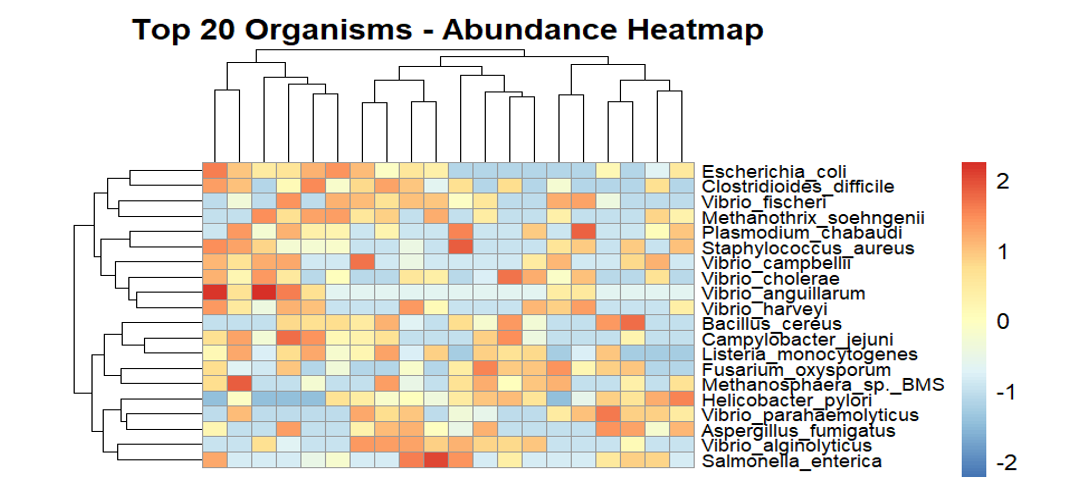
Metagenomic characterization of foodborne pathogens in Nigerian seafood remains critically limited. This sentinel case investigated Vibrio species in a single crab (Callinectes spp.) from Eleko Beach, Lagos, Nigeria, using shotgun metagenomic sequencing on the PacBio Onso platform. Taxonomy was assigned via Kraken2/Bracken with Krona visualization. Diversity analyses used the vegan package in R. Phylogenetic analysis employed MAFFT, RAxML, and ape. Functional annotation used Prodigal and InterProScan. Antimicrobial resistance genes were detected using RGI/CARD. Taxonomic classification revealed 2,379 Vibrio fragments (0.04% of classified reads), identifying seventeen species including V. anguillarum (1,097), V. harveyi group (616), V. parahaemolyticus (237), V. cholerae (6), and V. vulnificus (10). Photobacterium included P. ganghwense (97) and P. damselae (15). Eukaryota constituted 45.6% of reads, with Homo sapiens at 6.44%, indicating human DNA contamination. Other pathogens included E. coli, S. aureus, L. monocytogenes, and C. jejuni. Alpha diversity was moderate (Shannon = 2.10; Chao1 = 287). Beta diversity revealed significant group differences (PERMANOVA: R² = 0.2345, p = 0.001). Phylogenetic analysis resolved seven genera, with Vibrio as a well-supported clade (bootstrap ≥ 90%). Functional annotation identified protein kinase domains and reverse transcriptases. The CARB-7 β-lactamase gene was detected. This sentinel case identified seventeen Vibrio species and a β-lactamase resistance gene in a single Lagos crab. The high human DNA contamination emphasizes the urgent need for effective decontamination protocols in seafood metagenomics.
References
Adeleye, I.A and Enyinnia, V.A (2010). Characterization and pathogenicity of Vibrio spp. contaminating seafoods in Lagos, Nigeria. Nature and Science, 8(11): 112–118. https://www.semanticscholar.org/paper/31d486fd3b0c155b686e6a6441d31ef2ba80ca79
Adoki, A., & Odokuma, L. O. (2007). Occurrence and distribution of bioluminescent bacteria in the bonny estuary, Niger Delta, Nigeria. Journal of Applied Sciences and Environmental Management, 11(2), 45–50. https://doi.org/10.5897/AJB2007.000-2020
Aigbodion, O.B and Nnenji, O.C (2016). Antimicrobial susceptibility patterns and plasmid profile of Vibrio species from processed and unprocessed food grade crab. Food and Applied Bioscience Journal, 4(2): 64–83 DOI: https://doi.org/10.14456/fabj.2016.7.
Alarape, S.A, Badmus, I.O, Aina, O.O and Adeyemo, O.K (2025). Prevalence, characterisation, and antibiotic resistance profiles of Vibrio cholerae and Vibrio parahaemolyticus in African catfish across selected regions in Ibadan, Nigeria. World Aquaculture Society Meeting https://was.org/Meeting/Program/PaperDetail/166672.
Bell, A.G, Cable, J, Temperton, B and Tyler, C.R (2025). Assessment of the effectiveness of host depletion techniques for profiling fish skin microbiomes and metagenomics analysis. Microbiology Spectrum, 13(2): e01055-24. https://doi.org/10.1128/spectrum.01838-25
Bloomfield, S.J, Zomer, A.L, O'Grady, J, Kay, G.L, Wain, J, Janecko, N, Palau, R and Mather, A.E (2023). Determination and quantification of microbial communities and antimicrobial resistance on food through host DNA-depleted metagenomics. Food Microbiology, 110: 104162. https://doi.org/10.1016/j.fm.2022.104162
Brinch, C, Otani, S, Munk, P, van den Beld, M, Franz, E and Aarestrup, F.M (2024). Discovery of Vibrio cholerae in urban sewage in Copenhagen, Denmark. Microbial Ecology, 87(1): 102. https://doi.org/10.1007/s00248-024-02419-7
Broekaert, K., Heyndrickx, M., Herman, L., Devlieghere, F., & Vlaemynck, G. (2011). Seafood quality analysis: Molecular identification of dominant microbiota after ice storage on several general growth media. Food Microbiology, 28(6), 1162–1169 https://doi.org/10.1016/j.fm.2011.03.009
Chowdhury, G, Pazhani, G.P, Sarkar, A, Rajendran, K, Mukhopadhyay, A.K, Bhattacharya, M.K, Ghosh, A and Ramamurthy, T (2016). Carbapenem resistance in clonally distinct clinical strains of Vibrio fluvialis isolated from diarrheal samples. Emerging Infectious Diseases, 22(10). https://doi.org/10.3201/eid2210.151612
Fu, S, Yao, T, Lu, J, Peng, J and Ye, L (2025). Diversity and Interactions of Bacterial Communities in the Gills of Kumamoto Oyster (Crassostrea sikamea) and Its Culture Environment. Aquatic Life and Ecosystems, 1(1): 5. https://doi.org/10.53941/ale.2025.100005
Fuertes-Perez, S., Hauschild, P., Hilgarth, M., & Gänzle, M. G. (2019). Biodiversity of Photobacterium spp. in meat and meat products. Frontiers in Microbiology, 10, 2399. https://doi.org/10.3389/fmicb.2019.02399
Google Maps. (2025). Elegushi Royal Beach, Lekki Phase 1, Lagos, Nigeria [Map]. Retrieved October 16, 2026, from https://www.google.com/maps
Huang, Z, Li, Y, Yu, K, Ma, L, Pang, B, Qin, Q, Li, J, Wang, D, Gao, H and Kan, B (2024). Genome-wide expanding of genetic evolution and potential pathogenicity in Vibrio alginolyticus. Emerging Microbes & Infections, 13(1): 2350164. https://doi.org/10.1080/22221751.2024.2350164
Inana, M.E, Ogbonna, D.N, Odu, N.N and Amadi, L.O (2024). Prevalence of Campylobacter and Vibrio species associated with selected seafood; oyster (Crassostrea gasar), shrimps (Caridea) and prawn (Penaeus monodon). International Journal of Microbiology and Applied Sciences, 3(2): 54–65. http://www.ijmaas.com/wp-content/uploads/2024/06/Inana-IJMAAS
Inana, M.E, Ogbonna, D.N, Odu, N.N and Amadi, L.O (2024). Antibiotic sensitivity pattern and resistance genes of Campylobacter and Vibrio species associated with sea foods sold in Port Harcourt Metropolis. International Journal of Microbiology and Applied Sciences, 3(2): 78–87 http://www.ijmaas.com/wp-content/uploads/2024/07/Inana-IJMAAS
Ismail, E.T, El-Son, M.A.M, El-Gohary, F.A and Zahran, E (2024). Prevalence, genetic diversity, and antimicrobial susceptibility of Vibrio spp. infected gilthead sea breams from coastal farms at Damietta, Egypt. BMC Veterinary Research, 20: 129 https://doi.org/10.1186/s12917-024-03978-0
Jayakumar, J.M, Martinez-Urtaza, J, Brumfield, K.D, Jutla, A.S, Colwell, R.R, Cordero, O.X and Almagro-Moreno, S (2024). Climate change and Vibrio vulnificus dynamics: A blueprint for infectious diseases. PLoS Pathogens, 20(12): e1012767. https://doi.org/10.1371/journal.ppat.1012767
Klosinska, K, Cundill, B, Brooks, J, Ambler, G, Grogono, D and Floto, R.A (2022). Reducing human DNA bias in cystic fibrosis airway specimens for microbiome analysis. Journal of Microbiological Methods, 200: 106540. https://doi.org/10.1016/j.mimet.2022.106540
Odeniyi, O.A, Olawuyi, O.J, Ogunsanya, O and Unuofin, J.O (2022). Occurrence of common core structure and genotype-specific signatures among the Vibrio of environmentally diverse vended crabs and shrimps from selected Lagos seafood markets, Nigeria. Biodiversitas: Journal of Biological Diversity, 23(6): 3081–3090. https://doi.org/10.13057/biodiv/d230635
Onifade, A.K and Adeyanju, S.J (2022). Antibiotic sensitivity and plasmid assessment of ampicillin-resistant Vibrio cholerae from seafoods in coastal areas of Ondo State. Microbes and Infectious Diseases, 3(4): 1006–1015. https://doi.org/10.21608/mid.2022.113971.1224
Pereira-Marques, J, Hout, A, Ferreira, R.M, Weber, M, Pinto-Ribeiro, I, van Doorn, L.J, Knetsch, C.W and Figueiredo, C (2019). Impact of host DNA and sequencing depth on the taxonomic resolution of whole metagenome sequencing for microbiome analysis. Frontiers in Microbiology, 10: 1277 https://doi.org/10.3389/fmicb.2019.01277
Preheim, S.P, Boucher, Y, Wildschutte, H, David, L.A, Veneziano, D, Alm, E.J and Polz, M.F (2011). Metapopulation structure of Vibrionaceae among coastal marine invertebrates. Environmental Microbiology, 13(1): 265–275. https://doi.org/10.1111/j.1462-2920.2010.02328.
Quintero-Campos, P, Salvador-Clavell, R, Martín, B, Fouz, B, Amaro, C, Tortajada-Genaro, L.A and Maquieira, Á (2025). Environmental monitoring of a climate change indicator (Vibrio vulnificus) in coastal wetland water samples based on field-deployable detection. Science of the Total Environment, 986:179791. https://doi.org/10.1016/j.scitotenv.2025.179791
Rivas, A.J, Lemos, M.L and Osorio, C.R (2013). Photobacterium damselae subsp. damselae, a bacterium pathogenic for marine animals and humans. Frontiers in Microbiology, 4: 283. https://doi.org/10.3389/fmicb.2013.00283
Rodgers, C., Parveen, S., Chigbu, P., & Jacobs, J. (2014). Prevalence of Vibrio parahaemolyticus, and Vibrio vulnificus in blue crabs (Callinectes sapidus), seawater and sediments of the Maryland Coastal Bays. Journal of Applied Microbiology, 117(4), 1198–1209. https://doi.org/10.1111/jam.12608
Tarh, J.E and Inyang, I.H (2024). Evaluation of antibiogram profile of Vibrio cholerae isolates from sea foods and water samples from Cross River State, Nigeria. South Asian Journal of Research in Microbiology, 18(7): 9–29. https://doi.org/10.9734/sajrm/2024/v18i7370
Xu, L, Hu, X, Ma, C, Wang, W, Zhang, F, Zhao, M, Xu, J, Lv, X, Su, Z, Ma, L, Ma, K and Liu, Z (2025). Integration of metagenome and full-length 16S rRNA gene sequencing of the mariculture environmental bacterial community reveal potential pathogenic bacteria in broodstock breeding of the mud crab, Scylla paramamosain. Aquaculture Reports, 43 https://doi.org/10.1016/j.aqrep.2025.102880
Zhang, X.-H, He, X and Austin, B (2020). Vibrio harveyi: a serious pathogen of fish and invertebrates in mariculture. Marine Life Science & Technology, 2: 231–245. . https://doi.org/10.1007/s42995-020-00037-z
Zheng, H, Huang, Y, Liu, P, Yan, L, Zhou, Y, Yang, C, Wu, Y, Qin, J, Guo, Y, Pei, X, Guo, Y, Cui, Y and Liang, W (2022). Population genomics of the food-borne pathogen Vibrio fluvialis reveals lineage associated pathogenicity-related genetic elements. Microbial Genomics, 8(2). https://doi.org/10.1099/mgen.0.000769
Downloads
Published
Issue
Section
Categories
License
Copyright (c) 2026 Shola Owolabi, Olusegun Stephen Adetoro, Olalekan Anthony Hassan, James Edwards Idoko Simeon, Samson Adeolu Adeyemo, Mopelola Oyinade Odebiyi, Basirat Omotayo Salako

This work is licensed under a Creative Commons Attribution 4.0 International License.


