
Prevalence of Rhesus D Status, Maternal Awareness and Pregnancy Outcomes Among Antenatal Attendees at Asubiaro State Specialist Hospital, Osun State, Nigeria
DOI:
https://doi.org/10.33003/fjs-2026-1019-6200Keywords:
Rhesus D Status, Maternal Awareness, Pregnancy Outcome, Antenatal Clinic, Anti-D ProphylaxisAbstract
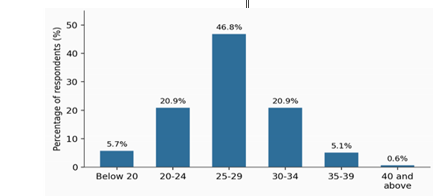
RhD-negative status is the absence of the RhD antigen in an individual’s blood. It becomes clinically significant in pregnancy when an RhD-negative woman carries an RhD-positive fetus, as exposure to fetal RhD-positive red blood cells may result in maternal anti-D alloimmunization. Maternal-fetal RhD incompatibility is preventable through appropriate screening, awareness, and Anti-D prophylaxis. However, evidence on its prevalence and maternal awareness among antenatal populations in Nigeria remains limited. This study assessed prevalence of Rhesus D status, maternal awareness, and pregnancy outcomes among antenatal attendees at Asubiaro State Specialist Hospital, Osun State, Nigeria. A descriptive cross-sectional study was conducted among 158 pregnant women selected through convenience sampling. Data were collected using a structured questionnaire and laboratory records and analyzed using IBM SPSS Statistics version 27. Descriptive sttistics were used to summarize participants’ characteristics and study variables. Respondents were predominantly aged 25–29 years (46.8%), married (91.8%), and Yoruba (77.2%). Laboratory-confirmed RhD-negative status was identified in 6 of 158 respondents, giving a prevalence of 3.8%. Maternal awareness of RhD status was generally low, with a grand mean score of 2.17 on a four-point scale. Knowledge was particularly limited regarding partners’ RhD status, partners’ blood-group testing, and the use of Anti-D prophylaxis. Financial status, attendance at antenatal health talks, early antenatal booking, and previous multiple pregnancies were perceived as factors influencing awareness. RhD-negative status occurred among 3.8% of respondents, while awareness of RhD incompatibility and its prevention was generally low. Repeated, targeted antenatal education on RhD screening, partner testing, and Anti-D prophylaxis is recommended
References
Adeyemi, A., & Bello-Ajao, H. (2016). Prevalence of Rhesus D-negative blood type and the challenges of Rhesus D immunoprophylaxis among obstetric population in Ogbomoso, Southwestern Nigeria. Annals of Tropical Medicine and Public Health,
9(1), 12-12.
Afolabi, K. O., & Bello, T. O. (2023). Determinants of health literacy on blood group compatibility among antenatal care attendees in Osun State, Nigeria. Nigerian Journal of Health Sciences, 23(1), 34–41.
Bello, C. B., Esan, D. T., Akerele, S. A., & Fadare, R. I. (2022). Maternal health literacy, utilisation of maternal healthcare services and pregnancy outcomes among newly delivered mothers: A cross-sectional study in Nigeria. Public Health in Practice, 3, 100266.
Erhabor, O., Erhabor, T., Adias, C. T., & Polycarp, I. I. (2021). Distribution of clinically relevant blood group antigens among Nigerians and the management of rhesus D negative pregnancies. Human Blood Group Systems and Haemoglobinopathies, IntechOpen, 15–32. https://doi.org/10.5772/intechopen.90372
Ibrahim, I. A., & Onwudiegwu, U. (2025). Improving maternal serological screening coverage in Southwestern Nigeria: Policy implications for state health management boards. Nigerian Post-Graduate Medical Journal, 32(1), 12–21.
Imoru, M., Babangida, S., Erhabor, O., Mohammed, H. A., & Egeonu, S. (2025). Distribution of ABO, Rhesus phenotypes, and Kell blood group antigens among pregnant women of Lelna ethnic group in Kebbi State, Northwest Nigeria. Journal of Hematology and Allied Sciences, 5(1), 66–71. https://doi.org/10.25259/JHAS_32_2024
Irinoye, O.O., Adesoji, B.A., Adeaga, A.T., & Oladimeji, T.Y. (2023). Assessing antenatal health education given by nurse-midwives in Ile-Ife, Nigeria. African Journal of Midwifery and Women's Health.
Kotila, T. R., Odukogbe, A. A., Okunlola, M. A., Olayemi, O., & Obisesan, K. A. (2023). The pregnant rhesus negative Nigerian woman. The Nigerian Postgraduate Medical Journal, 12(4), 305–307. https://pubmed.ncbi.nlm.nih.gov/16380744/
Musa, A. Z., Mustapha, S. S., Abubakar, B. I., Lawal, N. O., Grema, M. F., & Bashir, A. A. M. (2025). Neonatal hyperbilirubinemia: A case of complex management involving ABO incompatibility, sepsis, and suspected G6PD deficiency treated with methyl prednisolone. World Journal of Advanced Research and Reviews, 25(2), 2212–2219. https://doi.org/10.30574/wjarr.2025.25.2.0620
Ojo, E. A., & Osuntusa, A. O. (2021). Assessment of pregnant women's knowledge about
Rhesus incompatibility prevention at Babcock University Teaching Hospital, IlishanRemo, Ogun State. International Journal of Academic Research in Business, Arts & Science, 3(6), 5–15. https://doi.org/10.5281/zenodo.4914344
Olu-Abiodun, O., & Sodimu, J. (2025). Assessment of knowledge, attitude and perceived dangers of Rhesus incompatibility among pregnant women attending primary healthcare centres in Ogun State, Nigeria. African Journal of Midwifery and Women's Health, 15(3), 1–10. https://doi.org/10.12968/ajmw.2020.0034
Onyango, B. O., Onaba, E., & Kabanda, N. (2025). THE prevalence of rhesus isoimmunization among rhesus negative pregnant women in African hospitals: A systematic review and meta-analysis. Student’s Journal of Health Research Africa, 6(6), 11. https://doi.org/10.51168/sjhrafrica.v6i6.1866
Oyeyemi, O. T., & Okunlola, O. A. (2023). Soil-transmitted helminthiasis (STH) endemicity and performance of preventive chemotherapy intervention programme in Nigeria (in year 2021). Scientific reports, 13(1), 10155.
Otieno, J. A., Kosgei, R. J., Barasa, C. W., Ogutu, O., & Mukii, R. B. (2025). Burden of Rhesus isoimmunization and pregnancy outcomes: a cross-sectional study conducted at Kenyatta National Hospital, Kenya. Pan African Medical Journal, 52, 163. https://doi.org/10.11604/pamj.2025.52.163.47030
Otomewo, L., John-Olabode, S., Okunade, K., Olorunfemi, G., & Ajie, I. (2020). Prevalence of Rhesus C and D alloantibodies among Rhesus-negative women of childbearing age at a tertiary hospital in South-West Nigeria. Nigerian Journal of Clinical Practice, 23(12), 1759–1766. https://doi.org/10.4103/njcp.njcp_114_20
Sulaiman, A., & Abdullahi, M. (2025). Knowledge and Attitude of Pregnant women on ABO and Rhesus blood grouping towards Preventing Neonatal Hemolytic Disease at Rasheed Shekoni Federal University Teaching Hospital, Dutse, Jigawa State, Nigeria. PubMed, 66(4), 1406–1422. https://doi.org/10.71480/nmj.v66i4.843
Uzochukwu, C. E., & Nwachukwu, C. I. (2022). Awareness and knowledge of Rhesus factor incompatibility among pregnant women in Anambra State, Nigeria. Global Journal of Arts, Humanities and Social Sciences, 10(5), 45–58.
World Health Organization. (2021). WHO recommendations on antenatal care for a positive pregnancy experience: Serological screening and maternal immunization protocols. World Health Organization.
Yoham, A. L., & Casadesus, D. (2023). RHO (D) immune globulin. StatPearls - NCBI Bookshelf. https://www.ncbi.nlm.nih.gov/books/NBK557884/
Downloads
Published
Issue
Section
Categories
License
Copyright (c) 2026 Daramola Chinonye Lucky, Adeyemi Adeola Oluwadunni, Akinwale Oladayo Damilola, Adeniyi Victoria Adenike

This work is licensed under a Creative Commons Attribution 4.0 International License.


