
Profitability and Socio-Economic Factors Influencing Rice Processing in Jalingo Local Government Area, Taraba State, Nigeria
DOI:
https://doi.org/10.33003/fjs-2026-1021-6213Keywords:
processing,, profitability,, processing infrastructure,, socio-economic factorsAbstract
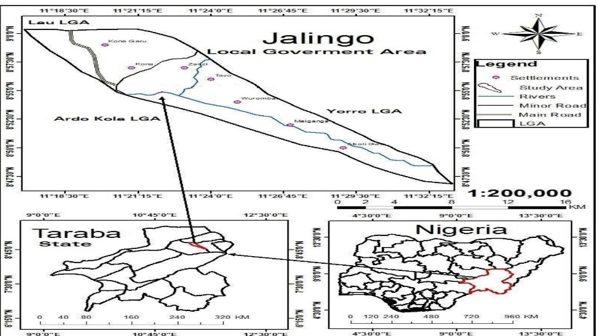
This study examined the socio-economic characteristics of rice processors, the availability of processing infrastructure, the cost and returns of rice processing, the influence of socio-economic factors on revenue, and the major constraints affecting rice processing in Jalingo Local Government Area (LGA), Taraba State, Nigeria. Primary data were collected from 60 rice processors using a structured questionnaire. The data were analysed using descriptive statistics, gross margin analysis, a Likert-type scale, and multiple regression analysis. The results showed that 73% of the respondents were male, 75% were aged 21–30 years, 50% had secondary education, and 73% had between one and five years of processing experience. Milling machines were the most frequently reported processing equipment, followed by sewing machines, weighing scales, and destoners. The cost and return analysis indicated an average reported revenue of ₦68,250.00 and total reported cost of ₦52,237.10 per 100 kg bag, yielding a gross margin of approximately ₦16,012.90. Regression results indicated positive and statistically significant associations between revenue and age, processing experience, and sex. The reported coefficient of determination was 0.6252, while the variance inflation factor was 1.11 and the Breusch–Pagan test yielded a p-value of 0.7069. Fluctuating market prices, inadequate power supply, high energy costs, outdated equipment, difficulty retaining experienced workers, and poor road networks were identified as important constraints. The study concludes that rice processing offers income-generating opportunities in Jalingo LGA, although infrastructure and operating-cost constraints may limit performance. It recommends improvements in electricity supply, access to modern processing equipment, transportation infrastructure, and technical training.
References
Ajala, A. S., & Gana, A. (2015). Analysis of challenges facing rice processing in Nigeria. Journal of Food Processing, 2015, Article 893673, 1–6. https://doi.org/10.1155/2015/893673
Christopher, A., James, P. H., & Gani, A. T. (2022). Suitability of different water sources for irrigation in floodplain areas of Jalingo, Taraba State, Nigeria for sustainable crop production.
Turkish Journal of Agriculture - Food Science and Technology, 10(4), 524–530. https://doi.org/10.24925/turjaf.v10i4.524-530.4441
Dzahan, H. L. (2025). Impact of post-harvest losses of rice (Oryza sativa) on rice processors income in Benue State Nigeria. Asian Journal of Advances in Agricultural Research, 25(4), 1–9. https://doi.org/10.9734/ajaar/2025/v25i4595
Hassan, A., Gama, E. N., Haruna, U., & Ehien, A. E. (2025). Determinants of post-harvest losses of rice in north-east Nigeria. Agriculture, Food, and Natural Resources Journal, 4(1), 138–145. https://doi.org/10.5281/zenodo.15113020
Hassan, C. K., Jonathan, S., & Idris, A. (2022). Determinant of allocative efficiency among rainfed rice farmers in Ardo-Kola and Jalingo Local Government Areas of Taraba State, Nigeria. Journal of Agripreneurship and Sustainable Development, 5(1), 94–102. https://doi.org/10.59331/jasd.v5i1.293
Muhammad, I. M., Sanusi, A., Wahab, S., & Ogunkolu, A. B. (2022). People's perception of land use changes along the flood plain of River Gwoi in Jalingo, Taraba State, Nigeria. Gombe Journal of Geography and Environmental Studies, 2(3), 438–454.
Downloads
Published
Issue
Section
Categories
License
Copyright (c) 2026 Ibrahim Audu Zubairu, Grace Confidence Falack, Hadizah Othman Gadu; Onyinyechukwu Janefrances Orafu; Habila Kauna

This work is licensed under a Creative Commons Attribution 4.0 International License.


