
Intestinal Schistosomiasis as a Public Health Threat to School Children Aged 0 – 14 Years: A Case Study in Bassa LGA, Plateau State, Nigeria
DOI:
https://doi.org/10.33003/fjs-2026-1021-6226Keywords:
Detection, Primary School, Pupils, Schistosomiasis, SwimmingAbstract
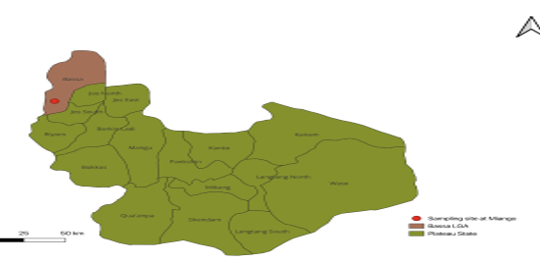
Schistosomiasis is an infectious, zoonotic, neglected tropical disease of public health concern, caused by blood flukes of the genus Schistosoma. In developing countries, it causes serious morbidity and mortality. It leads to chronic infection affecting health and learning, especially among young school children having contact with water contaminated with snails. Thus, this study aimed to determine the detection rate of Schistosoma spp. and its public health implications among pupils of primary school. A cross-sectional study was conducted on pupils in Miango, Plateau State, Nigeria. Stool samples were obtained from 94 pupils aged 4-14 years. The stool samples were analyzed for the presence of Schistosoma eggs using the concentration method. Questionnaires were administered to 104 pupils to assess risk factors for clinical presentations common to schistosomiasis. Findings revealed an overall detection rate of 3.20%, with a higher rate among males (6.30%) compared to females (1.60%). Pupils aged 10-14 years exhibited the highest rate of schistosomiasis infection (6.70%). However, no statistically significant differences were observed across sex (P>0.05) and age groups (P>0.05). Swimming was strongly and significantly (P=0.0009) associated with dysentery. These results portray the presence of schistosomiasis among pupils in Miango. Despite the low prevalence observed, schistosomiasis remains a public health threat, warranting continued efforts in prevention and control - public enlightenment, provision of safe water sources, and ensuring regular distribution of antiparasitic interventions.
References
1. Aula, F. B., Musa, D. M., & Kamara, L. M. (2021). Impact of Health Education on Schistosomiasis Control in Rural Communities. African Health Sciences 21(4): 1052-1060.
2. CDC (Center for Disease Control and Prevention). (2024). DPDx-Laboratory identification of parasites of public health concern. https://www.cdc.gov/dpdx/schistosomiasis/index.html. Retrieved on 10th October, 2026 at 2:38pm
3. Dawet, A., Bulus, E., Joachim, B. N., Lumi, E. B., & Yakubu, D. P. (2019). Schistosomiasis among primary school pupils in Pilgani Distric, Langtang North Local Government Area, Plateau State, Nigeria. Biological and Pharmaceutical Sciences. 09(01), 005–014: DOI:https://doi.org/10.30574/ gscbps.2019.9.1.0135
4. Colley, D. G., Bustinduy, A. L., Secor, W. E., & King, C. H., (2014). Human schistosomiasis. Lancet. 383 (9936), 2253–2264
5. Osakunor, D. N. M., Woolhouse, M. E. J., & Mutapi, F. (2018). Paediatric schistosomiasis: What we know and what we need to know. PLoS Neglected Tropical Diseases, 12(2), e0006144. https://doi.org/10.1371/journal.pntd.0006144
6. WHO (World Health Organization). (2026). Schistosomiasis. Available at: https://www.who.int/news-room/fact-sheets/detail/schistosomiasis. Retrieved on 9th October, 2026, 10:34 am
7. Kasambala, M., Mduluza, T., Vengesai, A., Mduluza-Jokonya, T., Jokonya, L., Midzi, H., Makota, R. B., Mutemeri, A., Maziti, E., Dube-Marimbe, B., Chibanda, D., Mutapi, F., & Mukaratirwa, S. (2022). Effect of Schistosoma haematobium infection on the cognitive functions of preschool age children and benefits of treatment from an endemic area in Zimbabwe. BMC Infectious Diseases, 22(1), 809. https://doi.org/10.1186/s12879-022-07784-7
8. Cheesbrough, M. (2002). District Laboratory practice in Tropical Countries. Part 2 Cambridge University Press: Cambridge, UK, 105-112.
9. Tamomh AG, Yousfi SR, Abakar, AD and Nour BYM. (2018). Prevalence of intestinal schistosomiasis among basic School Children in White Nile Sugar Scheme a new irrigated project, White Nile State, Sudan. Biology and Medicine. 10(1). https://doi.org/10.4172/0974-8369.1000425
10. Condeng, Y. H., Katu, S., Aman, A. M., Rasyid, H., Bakri, S., & Iskandar, H. (2024). Praziquantel as the preferred treatment for schistosomiasis. International Maritime Health, 75(1), 49–54. https://doi.org/10.5603/imh.99453
11. Ogunlakin, A. D., Ojo, O. A., Ogunlakin, O. A., Adelakun, A. D., Adegbenro, A. T., Olagookun, F. I., Adeyeye, S. A., & Sonibare, M. A. (2025). Effects of Genetic polymorphism in susceptibility to schistosomiasis infection and adverse treatment outcomes. African Health Sciences, 25(3), 1–11. https://doi.org/10.4314/ahs.v25i3.2
12. Lim, R. M., Woolhouse, M. E. J., Mduluza, T., Chase-Topping, M., Osakunor, D. N. M., Chitsulo, L., & Mutapi, F. (2020). Investigating a strategy for quantifying schistosome infection levels in preschool-aged children using prevalence data from school-aged children. PLoS Neglected Tropical Diseases, 14(10), e0008650. https://doi.org/10.1371/journal.pntd.0008650
Downloads
Published
Issue
Section
Categories
License
Copyright (c) 2026 Dorcas Manasseh Dayom, Felix Idoko, Kennedy Musa Samdi, Ifeoma Augusta Ugwunna, Adeyinka Jeremy Adedeji, Newman Anagumba Chindidu, Ijeoma Nwagbo, Blessing Cabala Mwasara

This work is licensed under a Creative Commons Attribution 4.0 International License.


