
Response Surface Methodology-Based Modelling, Optimization and Validation of Sustainable Concrete Incorporating Waste Ceramic Tile Powder and Rice Husk Fibres
DOI:
https://doi.org/10.33003/fjs-2026-1023-6230Keywords:
Polyherbal Formulation, Antidiabetic, Syrup, LD50, GC-MS, Diabetes MellitusAbstract
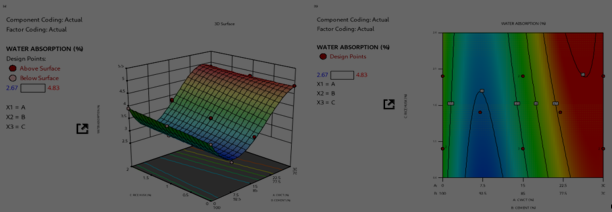
The increasing environmental burden associated with cement production and solid waste disposal has intensified the search for sustainable construction materials capable of reducing carbon emissions while maintaining adequate engineering performance. This study investigates the development, optimization, and validation of predictive models for eco-friendly concrete incorporating Waste Ceramic Tile Powder (WCTP) and Rice Husk Fibre (RHF) using Response Surface Methodology (RSM). An Optimal Custom Design (OCD) implemented in Design-Expert® Version 13 was employed to evaluate the combined effects of WCTP, Portland Limestone Cement (PLC), and RHF on water absorption, sulphate resistance, compressive strength at ambient temperature (20°C), and residual compressive strengths after exposure to elevated temperatures of 718°C and 821°C. Cubic × Linear Scheffé models were developed and assessed using Analysis of Variance (ANOVA), coefficient of determination (R²), adjusted coefficient of determination (Adj. R²), predicted coefficient of determination (Pred. R²), adequate precision (AP), and diagnostic residual analyses. The developed models were highly significant (p < 0.0001), with R² values ranging from 0.9707 to 0.9906, indicating excellent predictive capability. Numerical optimization identified an optimum mixture containing 10.5% WCTP, 89.5% PLC, and 0.03% RHF with an overall desirability of 0.745. Experimental validation confirmed the reliability of the developed models, with relative percentage errors below 5% for all responses. Furthermore, Mean Absolute Error (MAE) and Root Mean Square Error (RMSE) values of 0.896 and 1.064, respectively, demonstrated strong agreement between predicted and observed values. The developed models provide a reliable framework for designing sustainable concrete with enhanced mechanical, durability, and thermal performance.
References
Anderson, M. J., & Whitcomb, P. J. (2017). RSM simplified: Optimizing processes using response surface methods for design of experiments (2nd ed.). Productivity Press.
International Energy Agency. (2023). Technology roadmap: Low-carbon transition in the cement industry. Paris, France.
Medina, C., Sánchez de Rojas, M. I., & Frías, M. (2013). Reuse of sanitary ceramic wastes as supplementary cementitious materials. Cement and Concrete Composites, 34(1), 48–54.
Montgomery, D. C. (2019). Design and analysis of experiments (10th ed.). John Wiley & Sons.
Myers, R. H., Montgomery, D. C., & Anderson-Cook, C. M. (2016). Response surface methodology: Process and product optimization using designed experiments (4th ed.). Wiley.
Scrivener, K. L., John, V. M., & Gartner, E. M. (2018). Eco-efficient cements. Cement and Concrete Research, 114, 2–26.
Singh, M., & Siddique, R. (2017). Effect of waste ceramic tile powder on properties of concrete. Resources, Conservation and Recycling, 123, 48–57.
ASTM, ISO 834 and Eurocode references can be retained where cited in the methodology section.
Downloads
Published
Issue
Section
Categories
License
Copyright (c) 2026 Abdullahi Adefila, Okorie Austine Uche, Nurudeen Yusuf

This work is licensed under a Creative Commons Attribution 4.0 International License.


