
Mapping Building Performance and Wellbeing Assessment Approaches: A Bibliometric Analysis
DOI:
https://doi.org/10.33003/fjs-2026-1021-6253Keywords:
Bibliometric Analysis, Building Health Assessment, Wellbeing, occupant experience Assessment modelsAbstract
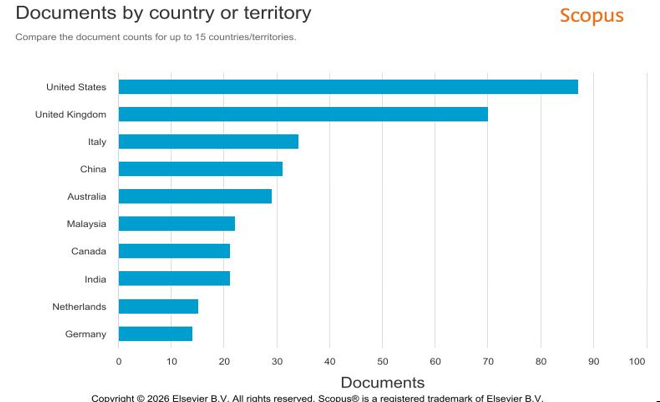
In research, the environmental quality of the indoor environment is usually assessed through building performance and wellbeing assessment approaches, which studies show are usually disconnected. Historically, building performance assessment approaches have largely focused on energy efficiency, carbon emissions, and resource consumption, while occupant experience studies focus on factors such as thermal and visual comfort, indoor air quality, perceived comfort, and psychological well-being. This separation creates a limited understanding of how building performance conditions interact with human experience. Therefore, this paper aims to examine how building performance and wellbeing assessment approaches have been integrated over time, employing a literature review method that combines bibliometric analysis of studies which span from 1989 - September 2026 through papers sourced on Scopus database. The findings reveal that building performance and wellbeing are assessed largely through separate pathways, with indoor environmental quality emerging as the main point of convergence between them. The geographic spread, spanning North-America, Europe, the Middle-East and East-Asia indicates that building performance and wellbeing assessment is a genuinely international research priority which highlights a gap in this study for the African context. Furthermore, building performance is mainly assessed through green building rating systems, Particularly BREEAM and wellbeing through WELL. The study highlights the need for more integrated assessment frameworks that consider physical building performance, occupant wellbeing and organisational outcomes within a common approach.
References
Abdul-Wahab, S., En, S., Elkamel, A., Ahmadi, L., & Yetilmezsoy, K. (2015). A review of standards and guidelines set by international bodies for the parameters of indoor air quality. Atmospheric Pollution Research, 6, 751–767. https://doi.org/10.5094/apr.2015.084
Afroz, Z., & O’Brien, W. (2020). A review of data collection and analysis requirements for certified green buildings. Energy and Buildings, 226, 110367–110367. https://doi.org/10.1016/j.enbuild.2020.110367
Alkhatib, H. (2026). Occupant Comfort: A Review of Assessment Methods, Models and Research Frontiers. Journal of Engineering Research. https://doi.org/10.1016/j.jer.2026.08.040
Arif, M., Kaushik, A., Mazroei, A., Katafygiotou, M., & Elsarrag, E. (2016). Occupant productivity and office indoor environment quality: A review of the literature. Building and Environment, 105, 369–389. https://doi.org/10.1016/j.buildenv.2016.06.001
Babich, F., Torriani, G., Corona, J., & Lara-Ibeas, I. (2023). Comparison of indoor air quality and thermal comfort standards and variations in exceedance for school buildings. Journal of Building Engineering. https://doi.org/10.1016/j.jobe.2023.106405
Berger, C., Mahdavi, A., Ampatzi, E., Crosby, S., Hellwig, R., Khovalyg, D., Pisello, A., Roetzel, A., Rysanek, A., & Vellei, M. (2023). Thermal Conditions in Indoor Environments: Exploring the Reasoning behind Standard-Based Recommendations. Energies. https://doi.org/10.3390/en16041587
Bungău, C., Bungau, T., Prada, I. F., & Prada, M. (2022). Green Buildings as a Necessity for Sustainable Environment Development: Dilemmas and Challenges. Sustainability. https://doi.org/10.3390/su142013121
Dam-Krogh, E. P., Rupp, R., Clausen, G., & Toftum, J. (2024). Scoping review of post occupancy evaluation of office buildings with focus on indoor environmental quality and productivity. Journal of Building Engineering. https://doi.org/10.1016/j.jobe.2024.108911
Danza, L., Barozzi, B., Bellazzi, A., Belussi, L., Devitofrancesco, A., Ghellere, M., Salamone, F., Scamoni, F., & Scrosati, C. (2020). A weighting procedure to analyse the Indoor Environmental Quality of a Zero-Energy Building. Building and Environment, 183, 107155. https://doi.org/10.1016/j.buildenv.2020.107155
De Castro, W. V., Ferreira, C., Barrelas, J., Gaspar, P., Mendes, M. P., & Silva, A. (2026). Maintenance as an Opportunity to Improve Residential Buildings’ Energy Efficiency: Evaluation of Life-Cycle Costs. Buildings. https://doi.org/10.3390/buildings16081551
Deng, Z., Dong, B., Guo, X., & Zhang, J.-S. (2024). Impact of Indoor Air Quality and Multi-domain Factors on Human Productivity and Physiological Responses: A Comprehensive Review. Indoor Air. https://doi.org/10.1155/2024/5584960
Devine, A., & Kok, N. (2015). Green Certification and Building Performance: Implications for Tangibles and Intangibles. The Journal of Portfolio Management, 41, 151–163. https://doi.org/10.3905/jpm.2015.41.6.151
Du, B., Crosby, S., Van Rooyen, C., & Licina, D. (2026). ATLAS: A Performance-Based Index for Integrated Evaluation and Benchmarking of Indoor Environmental Quality. Building and Environment. https://doi.org/10.1016/j.buildenv.2026.114985
Dwaikat, L., & Ali, K. (2018). Green buildings life cycle cost analysis and life cycle budget development: Practical applications. Journal of Building Engineering. https://doi.org/10.1016/j.jobe.2018.03.015
Elnaklah, R., Walker, I., & Natarajan, S. (2021). Moving to a green building: Indoor environment quality, thermal comfort and health. Building and Environment, 191, 107592. https://doi.org/10.1016/j.buildenv.2021.107592
Elsevier. (2026). Www.Elsevier.Com. https://www.elsevier.com/products/scopus
Elshafei, G., Katunský, D., Zeleňáková, M., & Negm, A. (2022). Opportunities for Using Analytical Hierarchy Process in Green Building Optimization. Energies. https://doi.org/10.3390/en15124490
Fassio, F., Fanchiotti, A., & De Lieto Vollaro, R. (2014). Linear, Non-Linear and Alternative Algorithms in the Correlation of IEQ Factors with Global Comfort: A Case Study. Sustainability, 6, 8113–8127. https://doi.org/10.3390/su6118113
Felgueiras, F., Mourão, Z., Moreira, A., & Gabriel, M. (2023). Indoor environmental quality in offices and risk of health and productivity complaints at work: A literature review. Journal of Hazardous Materials Advances. https://doi.org/10.1016/j.hazadv.2023.100314
Fissore, V., Fasano, S., Puglisi, G., Shtrepi, L., & Astolfi, A. (2023). Indoor Environmental Quality and Comfort in Offices: A Review. Buildings. https://doi.org/10.3390/buildings13102490
Gibbons, L., & Javed, S. (2023). Cost-optimal analysis of energy efficient hvac solution-sets for low-energy apartment buildings. Energy and Buildings. https://doi.org/10.1016/j.enbuild.2023.113332
Gobinath, P., Crawford, R., Traverso, M., & Rismanchi, B. (2024). Comparing the life cycle costs of a traditional and a smart HVAC control system for Australian office buildings. Journal of Building Engineering. https://doi.org/10.1016/j.jobe.2024.109686
Gou, Z., & Xie, X. (2017). Evolving green building: Triple bottom line or regenerative design? Journal of Cleaner Production, 153, 600–607. https://doi.org/10.1016/j.jclepro.2016.02.077
Graham, L., Parkinson, T., & Schiavon, S. (2021). Lessons learned from 20 years of CBE’s occupant surveys. Buildings and Cities. https://doi.org/10.5334/bc.76
Gulvanessian, H. (2001). EN1990 Eurocode—Basis of structural design. 144, 8–13. https://doi.org/10.1680/cien.2001.144.6.8
Hajare, A., & Elwakil, E. (2020). Integration of life cycle cost analysis and energy simulation for building energy-efficient strategies assessment. Sustainable Cities and Society, 61, 102293. https://doi.org/10.1016/j.scs.2020.102293
Heinzerling, D., Schiavon, S., Webster, T., & Arens, E. (2013). Indoor environmental quality assessment models: A literature review and a proposed weighting and classification scheme. Building and Environment, 70, 210–222. https://doi.org/10.1016/j.buildenv.2013.08.027
Hu, M., Simon, M., Fix, S., Vivino, A., & Bernat, E. (2021). Exploring a sustainable building’s impact on occupant mental health and cognitive function in a virtual environment. Scientific Reports, 11. https://doi.org/10.1038/s41598-021-85210-9
Kaushik, A., Arif, M., Syal, M., Rana, M., Oladinrin, O., Sharif, A., & Alshdiefat, A. (2022). Effect of Indoor Environment on Occupant Air Comfort and Productivity in Office Buildings: A Response Surface Analysis Approach. Sustainability. https://doi.org/10.3390/su142315719
Khovalyg, D., Berquand, C., Vergerio, G., Barthelmes, V., Chatterjee, A., Becchio, C., & Licina, D. (2023). Energy, SBS symptoms, and productivity in Swiss open-space offices: Economic evaluation of standard, actual, and optimum scenarios. Building and Environment. https://doi.org/10.1016/j.buildenv.2023.110565
Kim, Y. K., Abdou, Y., Abdou, A., & Altan, H. (2022). Indoor Environmental Quality Assessment and Occupant Satisfaction: A Post-Occupancy Evaluation of a UAE University Office Building. Buildings. https://doi.org/10.3390/buildings12070986
Li, Y., Kubicki, S., Guerriero, A., & Rezgui, Y. (2019). Review of building energy performance certification schemes towards future improvement. Renewable and Sustainable Energy Reviews. https://doi.org/10.1016/j.rser.2019.109244
Licina, D., Wargocki, P., Pyke, C., & Altomonte, S. (2021). The future of IEQ in green building certifications. Buildings and Cities. https://doi.org/10.5334/bc.148
Lolli, F., Coruzzolo, A., & Balugani, E. (2023). Indoor Environmental Quality (IEQ): A Comparison between TOPSIS- and PROMETHEE-Based Approaches for Indirect Eliciting of Category Weights. Toxics, 11. https://doi.org/10.3390/toxics11080701
Mahdavi, A., Martínez-Muñoz, I., & Berger, C. (2026). A formalism for a general theory of subjective multi-domain indoor-environmental quality perception. Frontiers in Built Environment. https://doi.org/10.3389/fbuil.2026.1819493
Marchi, L., Antonini, E., & Politi, S. (2021). Green Building Rating Systems (GBRSs). Encyclopedia. https://doi.org/10.3390/encyclopedia1040076
Mewomo, M., Toyin, J., Iyiola, C., & Aluko, O. (2023). Synthesis of critical factors influencing indoor environmental quality and their impacts on building occupants health and productivity. Journal of Engineering, Design and Technology. https://doi.org/10.1108/jedt-10-2021-0595
Mohammed, A., Ismail, M., Nafada, A. I., Dawaki, M., & Ajuji, M. (2026). Spatial and Temporal Variation of Indoor Environmental Quality and Occupancy across a Five-Node Office Sensor Network. FUDMA Journal of Sciences, 10(11), 353–358. https://doi.org/10.33003/fjs-2026-1011-5339
Mujan, I., Anđelković, A., Munćan, V., Kljajić, M., & Ružić, D. (2019). Influence of indoor environmental quality on human health and productivity—A review. Journal of Cleaner Production. https://doi.org/10.1016/j.jclepro.2019.01.307
Ncube, M., & Riffat, S. (2012). Developing an indoor environment quality tool for assessment of mechanically ventilated office buildings in the UK – A preliminary study. Building and Environment, 53, 26–33. https://doi.org/10.1016/j.buildenv.2012.01.003
Newsham, G., Veitch, J., Zhang, M.-Q., & Galasiu, A. (2019). Comparing better building design and operation to other corporate strategies for improving organizational productivity: A review and synthesis. Intelligent Buildings International, 14, 3–22. https://doi.org/10.1080/17508975.2019.1588700
Niza, I. L., De Souza, M. P., Da Luz, I. M., & Broday, E. (2023). Sick building syndrome and its impacts on health, well-being and productivity: A systematic literature review. Indoor and Built Environment, 33, 218–236. https://doi.org/10.1177/1420326x231191079
Palacios, J., Steele, K., & Zheng, S. (2021). Human health and productivity outcomes associated with indoor air quality: A systematic review. SSRN Electronic Journal. https://doi.org/10.2139/ssrn.3881998
Park, J., Loftness, V., & Aziz, A. (2018). Post-occupancy evaluation and IEQ measurements from 64 office buildings: Critical factors and thresholds for user satisfaction on thermal quality. Buildings, 8(11). Scopus. https://doi.org/10.3390/buildings8110156
Parkinson, T., De Dear, R., & Brager, G. (2019). Nudging the adaptive thermal comfort model. Energy and Buildings, 206, 109559. https://doi.org/10.1016/j.enbuild.2019.109559
Perera, I., Hewage, K., Rana, A., & Sadiq, R. (2025). Combining Energy Performance and Indoor Environmental Quality (IEQ) in Buildings: A Systematic Review on Common IEQ Guidelines and Energy Codes in North America. Energies. https://doi.org/10.3390/en18071740
Rad, P. N., Behzadi, F., Kalantarifard, A., Nazemi, N., & Djebbara, Z. (2026). Indoor Environmental Quality and the Brain: A Systematic Review of Physiological and Neural Evidence. Building and Environment. https://doi.org/10.1016/j.buildenv.2026.114405
Rohde, L., Jensen, R., Larsen, O. K., Jønsson, K. T., & Loukou, E. (2020). Determining indoor environmental criteria weights through expert panels and surveys. Building Research & Information, 48, 415–428. https://doi.org/10.1080/09613218.2019.1655630
Roumi, S., Zhang, F., & Stewart, R. (2022). Global Research Trends on Building Indoor Environmental Quality Modelling and Indexing Systems—A Scientometric Review. Energies. https://doi.org/10.3390/en15124494
Roumi, S., Zhang, F., Stewart, R., & Santamouris, M. (2022). Commercial Building Indoor Environmental Quality Models: A Critical Review. Energy and Buildings. https://doi.org/10.1016/j.enbuild.2022.112033
Samudro, H., Samudro, G., & Mangkoedihardjo, S. (2022). Prevention of indoor air pollution through design and construction certification–A review of the sick building syndrome conditions. Journal of Air Pollution and Health. https://doi.org/10.18502/japh.v7i1.8922
Snijder, H., & Steenbergen, H. (2020). Structural safety. Structural Basics. https://doi.org/10.1002/9783433610688.ch1
Sorkhan, F. M., Roumi, S., Zarandi, M. S., & Ganjouei, M. A. A. (2024). The Impact of Indoor Environmental Quality on Occupant Satisfaction in Commercial Buildings: A Comparison of Building Expert Opinions and Residents’ Experiences. Energies. https://doi.org/10.3390/en17061473
Tang, H., Liu, X., Geng, Y., Lin, B., & Ding, Y. (2022). Assessing the perception of overall indoor environmental quality: Model validation and interpretation. Energy and Buildings. https://doi.org/10.1016/j.enbuild.2022.111870
Tartarini, F., & Schiavon, S. (2025). Comparative analysis of PMV Models accuracy implemented in the ISO 7730:2005 and ASHRAE 55:2023. Building and Environment. https://doi.org/10.1016/j.buildenv.2025.112766
Van Der Voordt, T., & Jensen, P. (2021). The impact of healthy workplaces on employee satisfaction, productivity and costs. Journal of Corporate Real Estate. https://doi.org/10.1108/jcre-03-2021-0012
van Eck, N. J., & Waltman, L. (2010). Software survey: VOSviewer, a computer program for bibliometric mapping. Scientometrics, 84(2), 523–538. https://doi.org/10.1007/s11192-009-0146-3
Wang, C., Zhang, F., Wang, J., Doyle, J., Hancock, P., Mak, C., & Liu, S. (2021). How indoor environmental quality affects occupants’ cognitive functions: A systematic review. Building and Environment, 193, 107647. https://doi.org/10.1016/j.buildenv.2021.107647
Wang, S., Liu, N., & Zhang, J. (2021). Thermal performance optimization for housing unit design in a cold region of China. Journal of Building Performance Simulation, 14(5), 461–479. Scopus. https://doi.org/10.1080/19401493.2021.1970811
Wani, F. A., Sharma, V., Pal, A., Mathur, S., & Mathur, J. (2026). Occupant centric indoor environmental quality assessment within institutional settings. Smart and Sustainable Built Environment. https://doi.org/10.1108/sasbe-05-2025-0238
Wei, G., Yu, X.-Y., Fang, L., Wang, Q., Tanaka, T., Amano, K., & Yang, X. (2022). A review and comparison of the indoor air quality requirements in selected building standards and certifications. Building and Environment. https://doi.org/10.1016/j.buildenv.2022.109709
Xie, H.-J., Clements-Croome, D., & Wang, Q. (2017). Move beyond green building: A focus on healthy, comfortable, sustainable and aesthetical architecture. Intelligent Buildings International, 9, 88–96. https://doi.org/10.1080/17508975.2016.1139536
Zhang, D.-D., Mui, K., & Wong, L. (2023). Ten Questions Concerning Indoor Environmental Quality (IEQ) Models: The Development and Applications. Applied Sciences. https://doi.org/10.3390/app13053343
Zhang, X., Du, J.-T., & Chow, D. (2023). Association between perceived indoor environmental characteristics and occupants’ mental well-being, cognitive performance, productivity, satisfaction in workplaces: A systematic review. Building and Environment. https://doi.org/10.1016/j.buildenv.2023.110985
Zhou, H., Zhao, Y., Zhang, Z., Geng, Y., Yu, J., & Lin, B. (2022). Post occupancy investigation of 40 certified green buildings in Beijing: Results, lessons and policy suggestions. Journal of Building Engineering. https://doi.org/10.1016/j.jobe.2022.105153
Downloads
Published
Issue
Section
Categories
License
Copyright (c) 2026 Damilola Omusi Adesina

This work is licensed under a Creative Commons Attribution 4.0 International License.


