
Optimization of Glyphosate Removal from Aqueous Solution Using Shea Nut Shell Bioadsorbent; A Response Surface Methodology Approach
DOI:
https://doi.org/10.33003/fjs-2026-1021-6312Keywords:
Glyphosate, Bioadsorbent, Shea Nut Shell, Response Surface Methodology, Box- Behnken Design, AdsorptionAbstract
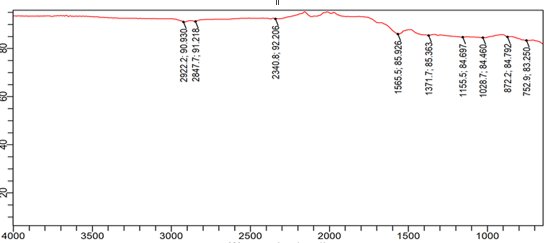
Glyphosate contamination of water resources from agricultural activities presents a significant environmental challenge, particularly in Nigeria where the herbicide is widely used. This study evaluated a shea nut shell (Vitellaria paradoxa)-derived bioadsorbent for glyphosate removal from aqueous solution and assessed the principal adsorption variables using response surface methodology based on a Box-Behnken design. The bioadsorbent was prepared by alkaline (NaOH) treatment followed by carbonization at 400 °C for 2 h and characterized using FTIR, SEM-EDS, PXRD, and XRF. Characterization revealed lignocellulosic functional groups (C-H, C=C, C-O-C, C-O), a rough and porous surface morphology, semi-crystalline cellulose with a crystallite size of 15.69 nm, and inorganic constituents including potassium, calcium, and iron. The point of zero charge (PZC) was 6.8. Batch adsorption experiments were conducted using a 46-run Box-Behnken design investigating pH (2–10), contact time (10–180 min), adsorbent dosage (0.10–2.00 g/100 mL), initial glyphosate concentration (10–100 mg/L), and temperature (25–45 °C). Experimental glyphosate removal ranged from 0% to 100%, with complete removal observed in two runs, the highest experimental adsorption capacity was 62.14 mg/g. The quadratic response surface model explained 52.92% of variation (R² = 0.5292) but exhibited limited predictive capability (adjusted R² = 0.1526; predicted R² = −0.8186), and the overall model was not statistically significant (F = 1.405, p = 0.2085). Initial glyphosate concentration was the only statistically significant linear factor (F = 6.106, p = 0.0206), with a significant quadratic effect (F = 7.187, p = 0.0128). The contact time × adsorbent dosage interaction approached significance (p = 0.0544).
References
Ahuja, M., Kumar, L., Kumar, K., Shingatgeri, V. M., & Kumar, S. (2024). Glyphosate: A review on its widespread prevalence and occurrence across various systems. Environmental Science: Advances, 3, 1030–1038. https://doi.org/10.1039/D4VA00085D
Ayoola, R. T., Olujimi, O. O., Bada, B. S., & Dedeke, G. A. (2023). Seasonal variations in the levels of glyphosate in soil, water and crops from three farm settlements in Oyo State, Nigeria. Heliyon, 9(9), e20324. https://doi.org/10.1016/j.heliyon.2023.e20324
Bhatnagar, A., Sillanpää, M., & Witek-Krowiak, A. (2015). Agricultural waste peels as versatile biomass for water purification: A review. Chemical Engineering Journal, 270, 244–271.
Borggaard, O. K., & Gimsing, A. L. (2008). Fate of glyphosate in soil and the possibility of leaching to ground and surface waters: A review. Pest Management Science, 64(4), 441–456. https://doi.org/10.1002/ps.1512
Cicilinski, A. D., Melo, V. F., & Peralta-Zamora, P. G. (2025). Glyphosate and AMPA sorption onto synthetic iron (oxyhydr)oxides: A comparative study. Journal of Molecular Liquids, 426, 127303. https://doi.org/10.1016/j.molliq.2025.127303
Dai, Y., Sun, Q., Wang, W., Lu, L., Liu, M., Li, J., Yang, S., Sun, Y., Zhang, K., Xu, J., Zheng, W., Hu, Z., Yang, Y., Gao, Y., Chen, Y., Zhang, X., Gao, F., & Zhang, Y. (2018). Utilizations of agricultural waste as adsorbent for the removal of contaminants: A review. Chemosphere, 211, 235–253. https://doi.org/10.1016/j.chemosphere.2018.06.179
Dissanayake Herath, G. A., Poh, L. S., & Ng, W. J. (2019). Statistical optimization of glyphosate adsorption by biochar and activated carbon with response surface methodology. Chemosphere, 227, 533–540. https://doi.org/10.1016/j.chemosphere.2019.04.078
Duke, S. O., & Powles, S. B. (2008). Glyphosate: A once-in-a-century herbicide. Pest Management Science, 64(4), 319–325.
Duwiejuah, A. B., Cobbina, S. J., Quainoo, A. K., Abubakari, A. H., & Bakobie, N. (2018). Adsorption of potentially toxic metals from mono and multi-metal systems using groundnut and shea nut shell biochars. Journal of Health & Pollution, 8(18), 180602. https://doi.org/10.5696/2156-9614-8.18.16
Food and Agriculture Organization of the United Nations & World Health Organization. (2016). Pesticide residues in food 2016: Special session of the Joint FAO/WHO Meeting on Pesticide Residues. Food and Agriculture Organization of the United Nations.
Foo, K. Y., & Hameed, B. H. (2010). Insights into the modeling of adsorption isotherm systems. Chemical Engineering Journal, 156(1), 2–10.
Georgin, J., Franco, D. S. P., Ramos, C. G., Tran, H. N., Benettayeb, A., Imanova, G., & Ali, I. (2024). Recent advances in removing glyphosate herbicide and its aminomethylphosphonic acid metabolite in water. Journal of Molecular Liquids, 124786. https://doi.org/10.1016/j.molliq.2024.124786
Hall, K. E., Spokas, K. A., Gámiz, B., Cox, L., Papiernik, S. K., & Koskinen, W. C. (2018). Glyphosate sorption/desorption on biochars—Interactions of physical and chemical processes. Pest Management Science, 74(5), 1206–1212. https://doi.org/10.1002/ps.4530
Herath, I., Kumarathilaka, P., Al-Wabel, M. I., Abduljabbar, A., Ahmad, M., Usman, A. R. A., & Vithanage, M. (2016). Mechanistic modeling of glyphosate interaction with rice husk derived engineered biochar. Microporous and Mesoporous Materials, 225, 280–288. https://doi.org/10.1016/j.micromeso.2016.01.017
Herviyanti, Maulana, A., Lita, A. L., Prasetyo, T. B., Monikasari, M., & Ryswaldi, R. (2022). Characteristics of Inceptisol ameliorated with rice husk biochar to glyphosate adsorption. Sains Tanah: Journal of Soil Science and Agroclimatology, 19(2), 230–240. https://doi.org/10.20961/stjssa.v19i2.61614
Hu, Y. S., Zhao, Y. Q., & Sorohan, B. (2011). Removal of glyphosate from aqueous environment by adsorption using water industrial residual. Desalination, 271(1–3), 150–156.
Igbemi, A. J., et al. (2021). [Full citation details as published — authors, title, journal, volume, pages, DOI]. [REVISION: The reviewer requested the full citation for Igbemi et al. (2021); the authors must insert the complete reference here from the original source.]
Ighalo, J. O., Ajala, O. J., Adeniyi, A. G., Babatunde, E. O., & Ajala, M. A. (2021). Ecotoxicology of glyphosate and recent advances in its mitigation by adsorption. Environmental Science and Pollution Research, 28(3), 2655–2668. https://doi.org/10.1007/s11356-020-11521-5
International Agency for Research on Cancer. (2017). Some organophosphate insecticides and herbicides. IARC Monographs on the Evaluation of Carcinogenic Risks to Humans (Vol. 112). International Agency for Research on Cancer.
Kanissery, R., Gairhe, B., Kadyampakeni, D., Batuman, O., & Alfezez, F. (2019). Glyphosate: Its environmental persistence and impact on crop health and nutrition. Plants, 8(11), 499.
Kimbi Yaah, V. B., Ahmadi, S., Quimbayo M., J., Morales-Torres, S., & Ojala, S. (2024). Recent technologies for glyphosate removal from aqueous environment: A critical review. Environmental Research, 240, 117477. https://doi.org/10.1016/j.envres.2023.117477
Lam, A. L., Hidayat, E., Mohamad Sarbani, N. M., Harada, H., Yonemura, S., Mitoma, Y., Herviyanti, & Gusmini. (2023). Glyphosate removal from water using biochar based coffee husk loaded Fe₃O₄. Water, 15(16), 2945. https://doi.org/10.3390/w15162945
Liu, G., Dai, Z., Liu, X., Dahlgren, R. A., & Xu, J. (2022). Modification of agricultural wastes to improve sorption capacities for pollutant removal from water—A review. Carbon Research, 1, 24. https://doi.org/10.1007/s44246-022-00025-1
Mayakaduwa, S. S., Kumarathilaka, P., Herath, I., Ahmad, M., Al-Wabel, M., Ok, Y. S., Usman, A., Abduljabbar, A., & Vithanage, M. (2016). Equilibrium and kinetic mechanisms of woody biochar on aqueous glyphosate removal. Chemosphere, 144, 2516–2521. https://doi.org/10.1016/j.chemosphere.2015.07.080
Mesnage, R., Benbrook, C., & Antoniou, M. N. (2019). Insight into the confusion over surfactant co-formulants in glyphosate-based herbicides. Food and Chemical Toxicology, 128, 137–145.
Mo, J., Yang, Q., Zhang, N., Zhang, W., Zheng, Y., & Zhang, Z. (2018). A review on agro-industrial waste (AIW) derived adsorbents for water and wastewater treatment. Journal of Environmental Management, 227, 395–405. https://doi.org/10.1016/j.jenvman.2018.08.069
Mohan, D., Sarswat, A., Ok, Y. S., & Pittman, C. U., Jr. (2014). Organic and inorganic contaminants removal from water with biochar, a renewable, low-cost and sustainable adsorbent—A critical review. Bioresource Technology, 160, 191–202.
Olaniyi, O. O., et al. (2025). [Full citation details — authors, title, journal, volume, pages, DOI]. [REVISION: The reviewer requested the full citation for Olaniyi et al. (2025); the authors must insert the complete reference here from the original source.]
Rallet, D., Paltahe, A., Tsamo, C., & Loura, B. (2022). Synthesis of clay-biochar composite for glyphosate removal from aqueous solution. Heliyon, 8(3), e09112. https://doi.org/10.1016/j.heliyon.2022.e09112
Salman, J. M., Abid, F. M., & Muhammed, A. A. (2012). Batch study for pesticide glyphosate adsorption onto palm oil fronds activated carbon. Asian Journal of Chemistry, 24(12), 5646–5648.
Sen, K. (2021). A comprehensive review of glyphosate adsorption with factors influencing mechanism: Kinetics, isotherms, thermodynamics study. In Intelligent environmental data monitoring for pollution management (pp. 93–125). Elsevier.
Sen, K., Mondal, N. K., Chattoraj, S., & Datta, J. K. (2017). Statistical optimization study of adsorption parameters for the removal of glyphosate on forest soil using the response surface methodology. Environmental Earth Sciences, 76, 22. https://doi.org/10.1007/s12665-016-6333-7
Van Bruggen, A. H. C., He, M. M., Shin, K., Mai, V., Jeong, K. C., Finckh, M. R., & Morris, J. G., Jr. (2018). Environmental and health effects of the herbicide glyphosate. Science of the Total Environment, 616–617, 255–268.
World Health Organization. (2022). Chemical fact sheet: Glyphosate and AMPA. In Guidelines for drinking-water quality: Fourth edition incorporating the first and second addenda. World Health Organization.
Downloads
Published
Issue
Section
Categories
License
Copyright (c) 2026 Muhammad Sani Abdullahi, Prof Okunola J. Uluwole

This work is licensed under a Creative Commons Attribution 4.0 International License.


