
An Explainable Hybrid CNN–Transformer Framework for Fraud Detection in Digital and Cryptocurrency Transactions
DOI:
https://doi.org/10.33003/fjs-2026-1024-6313Keywords:
Cost-sensitive learning, Cryptocurrency fraud detection, Explainable artificial intelligence (XAI), Hybrid CNN-Transformer, Image Generator for Tabular Data (IGTD), Zero-knowledge proofsAbstract
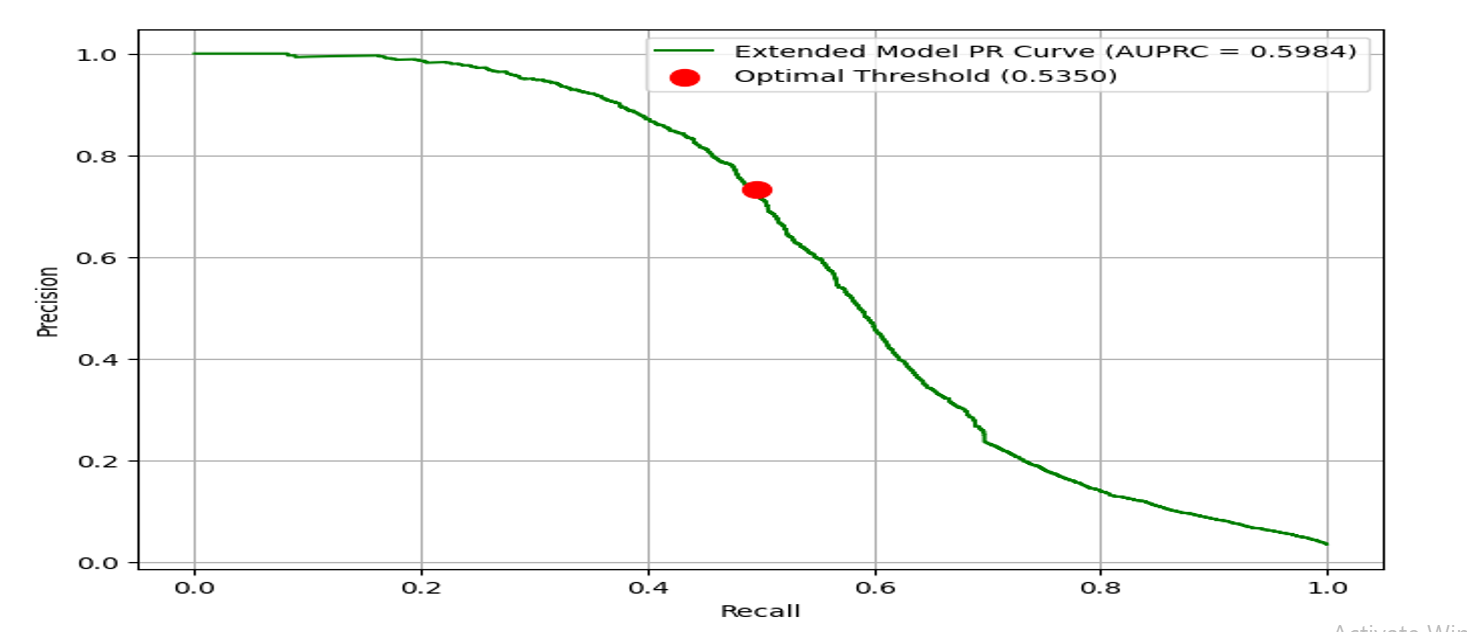
Fraud detection in digital payment and cryptocurrency systems is complicated by heterogeneous transaction records, class imbalance and limited model interpretability. This study proposed an explainable hybrid convolutional neural network (CNN)–Transformer framework for identifying suspicious transactions using the IEEE-CIS Fraud Detection and Ethereum Address Behavior datasets. Tabular features were transformed into spatial representations using the Image Generator for Tabular Data algorithm, while principal component analysis and rolling temporal sequences were employed to represent transaction behaviour. A dual-branch CNN–Transformer model was developed with cost-sensitive learning and hyperparameter optimisation using the Sparrow Search Algorithm. Model predictions were interpreted using SHapley Additive exPlanations, while an IPFS- and blockchain-based architecture was proposed for audit logging. Under the reported chronological evaluation procedure, the model achieved a precision of 0.7320, recall of 0.4956, F1-score of 0.5910 and area under the precision–recall curve of 0.5984 at a decision threshold of 0.5350. These results indicate moderate fraud-discrimination performance, although approximately half of the labelled fraudulent cases were not detected at the selected threshold. Further evaluation against established baseline models, independent validation of cryptocurrency fraud labels and experimental assessment of the proposed blockchain subsystem are necessary to establish the framework's comparative effectiveness and operational suitability.
References
Al-Hchaimi, A. A. J., Khalifa, M. A., & El-Shafai, W. (2026). Explainable AI with imbalanced learning strategies for blockchain transaction fraud detection. Engineering Reports, 8(1), e70545. https://doi.org/10.1002/eng2.70545
Al-Jaziri, S. A., Alqaryouti, O., & Almi’ani, K. (2026). SkillChain DX: A policy framework for AI-driven talent mapping and blockchain-based credential validation in Dubai Government. Applied Sciences, 16(4), 2114. https://doi.org/10.3390/app16042114
Alessi, G., & Fugini, M. (2026). Adaptive real-time financial fraud detection with explainable AI tools. Digital Threats: Research and Practice. https://doi.org/10.1145/3794859
Allehaibi, K. H. (2026). Leveraging the variational autoencoder with the blockchain smart contracts model for strengthening fraud detection in financial sectors. Engineering, Technology & Applied Science Research, 16(1), 32712–32717. https://doi.org/10.48084/etasr.13371
Ampumuza, D., Katushabe, C., & Tamale, M. (2026). A systematic review and future directions for AI-driven detection of fraud patterns in SACCO transactions. Frontiers in Artificial Intelligence, 8, 1690482. https://doi.org/10.3389/frai.2025.1690482
Arzu, F., Gul, L., Waheed, A., Amin, M. U., Qadeem, S. E. Y., Alam, F., Ashraf, M., & Ali, A. (2026). An advanced AI-empowered fintech framework for credit card fraud detection in online transactions via Sparrow Search Algorithm–based adaptive optimization. Spectrum of Engineering Sciences, 4(1), 504–528. https://thesesjournal.com/index.php/1/article/view/1906
Darwish, S. M., EL-Naggar, S., & Elkaffas, S. M. (2026). Securing financial transactions: Exploring the role of lightweight blockchain-enabled deep learning for fraud detection in FinTech systems. Cybersecurity, 9(1), 8. https://doi.org/10.1186/s42400-025-00436-8
Davuluri, P. S. L. N. (2026). Autonomous compliance systems: AI, event streaming, and the future of financial crime prevention. Journal of Informatics Education and Research, 6(1), 1288. https://jier.org/index.php/journal/article/view/4388
Fardous, M. (2026). AI-based revenue leakage detection models using transaction-level financial data: A review. International Journal of Scientific Interdisciplinary Research, 7(1), 37–71. https://ijsir.org/index.php/IJSIR/article/view/77
Fnu, H., Mirza, M. H., Marri, M. R., Singh, S., Kumar, N., Adol, D. M. D., & Bharany, S. (2026). Blockchain-assisted Transformer CNN framework with optimal feature selection for real-time digital payment fraud detection. International Journal of Computational Intelligence Systems, 19(1).
Gong, Y., Hu, P., Zhang, Z., Liu, P., Li, Z., Zhang, R., & Li, M. (2026). Data-centric generative and adaptive detection framework for abnormal transaction prediction. Electronics, 15(3), 633. https://doi.org/10.3390/electronics15030633
Khan, F. (2026). AI-enabled financial accuracy models for improving error detection and reporting integrity in corporate accounting systems. American Journal of Interdisciplinary Studies, 7(1), 141–176. https://ajisresearch.com/index.php/ajis/article/view/91
Lazea, G.-I., Lungu, C., & Bunget, O.-C. (2026). The role of AI in revolutionising cryptocurrency trading. Electronics, 15(4), 742. https://doi.org/10.3390/electronics15040742
Maligireddy, J. R. (2026). Agentic AI governance framework for real-time fraud detection in digital payment systems: A multi-layered architecture for financial security. Authorea Preprints. https://doi.org/10.22541/au.177145217.78578198/v1
Mallikarjuna, B., Setty, P. C., & Goundar, S. (2026). Integration of AI and ML in cryptoeconomics. IntechOpen. https://www.intechopen.com/chapters/1240367
Mohammed, H. S., Sallow, Z. B., & Zangana, H. M. (2026). AI-driven fraud detection in digital banking: A hybrid approach using deep learning and anomaly detection. Sistemasi: Jurnal Sistem Informasi, 15(1), 209–219. https://sistemasi.ftik.unisi.ac.id/index.php/stmsi/article/view/5757
Naz, S., Razzaq, H., Razzaq, A. B., Noman, M., Ali, M., Malik, J. T., Omer, M., Laghari, Z. A., & Zia, L. (2026). Truth in the machine: A unified framework for financial integrity, legal rights, and professional ethics in the age of AI and cryptocurrency. Scholar Journal of Economics and Business Management, 13(2), 45–62. https://doi.org/10.36347/sjebm.2026.v13i02.003
Ofosu-Ampong, K., Ansong, E., Akandekumtiim, J.-M., Asmah, A., Commey, N. O., Amankwaa, T., & Tsedzah, V. (2026). How AI-enabled security features shape payment security perceptions and trust in digital payment systems. Telematics and Informatics Reports, 21, 100298. https://doi.org/10.1016/j.teler.2026.100298
Saragih, H., Manurung, J., Sihotang, H. T., & Putra, I. M. A. P. (2026). Blockchain-enhanced security framework for defense supply chain management: An AI-driven smart contract approach with distributed ledger technology. Journal of Defense Technology and Engineering, 1(2), 145–158. https://research.idu.ac.id/index.php/jdte/article/view/60
Yang, H., Shukur, Z., & Sahran, S. (2026). A review of artificial intelligence for financial fraud detection. Applied Sciences, 16(4), 1931. https://doi.org/10.3390/app16041931
Downloads
Published
Issue
Section
Categories
License
Copyright (c) 2026 Nurudeen Olawale Ibrahim, Mustapha Olaitan Olarewaju, Hamid Dimeji Lawal, Yusuf Omotosho Bello-Sulayman

This work is licensed under a Creative Commons Attribution 4.0 International License.


