
Physicochemical Quality, Bacteriological Profile and Antibiotic Susceptibility Patterns of Bacterial Isolates from Ogi (Pap) Sold in Ijebu-Jesa, Osun State, Nigeria
DOI:
https://doi.org/10.33003/fjs-2026-1022-6391Keywords:
Ogi, physicochemical properties, bacteriological quality, antibiotic susceptibility, fermented maize, food safety, Ijebu-JesaAbstract
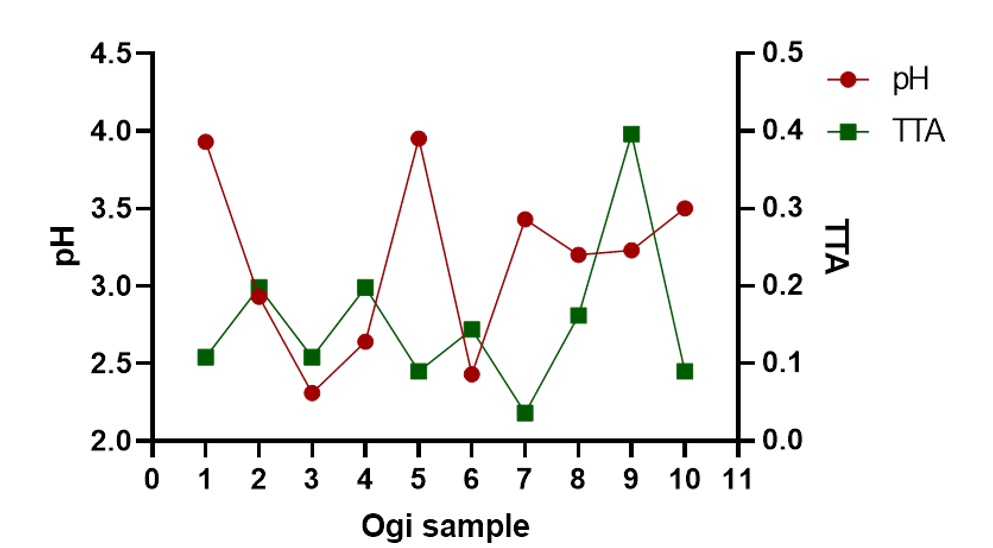
Ogi is a traditionally fermented cereal-based food widely consumed in Nigeria, and its quality may vary depending on processing, fermentation and handling practices. This study evaluated the physicochemical characteristics, bacteriological quality and antibiotic susceptibility patterns of bacterial isolates from ogi sold in Ijebu-Jesa, Osun State, Nigeria. Ten ogi samples were obtained from different vendors and analysed for pH, electrical conductivity, total dissolved solids (TDS), salinity and total titratable acidity (TTA). Bacterial isolation and identification were performed using conventional culture and biochemical techniques, while antibiotic susceptibility was assessed using the disk diffusion method. The pH, conductivity, TDS, salinity and TTA ranged from 2.31–3.95, 239–428 µS/cm, 120–217 mg/L, 118–216 mg/L and 0.036–0.396%, respectively. Strong positive correlations were observed among conductivity, TDS and salinity. Total heterotrophic bacterial counts ranged from no detectable growth to 1.0 × 10³ CFU/mL. Biochemical characterization presumptively identified Staphylococcus aureus, Escherichia coli, Bacillus cereus and Pseudomonas flexibilis. Antibiotic susceptibility testing revealed variations in inhibition zones among the isolates. The findings demonstrated variations in the physicochemical and bacteriological characteristics of commercially available ogi and the occurrence of potentially pathogenic bacteria. Improved hygiene, standardized processing and routine microbiological monitoring are recommended to enhance the quality and safety of ogi sold for human consumption.
References
Akintayo, O. A., Balogun, M. A., Bolarinwa, I. F. (2020). Potentials of rice as a suitable alternative for the production of Ogi (a cereal-based starchy fermented gruel). Journal of Food Science, 85(8): 2380–2388. https://doi.org/10.1111/1750-3841.15334
Bello, M. O., Teria, R. A., Marcus-Bello, O. A., Gbadamosi, T. A., Adegbehingbe, K. T. (2024). The effects of Sorghum bicolor leaf stalk (SBLS) on the bacterial quality of Ogi produced from maize (Zea mays). International Journal of Science and Research Archive, 11(2): 1405–1413. https://doi.org/10.30574/ijsra.2024.11.2.0584
Beshiru, A., Isichei-Ukah, B. O., Igbinosa, E. O. (2024). Prevalence, characterization, and implications of methicillin-resistant Staphylococcus aureus (MRSA) in ready-to-eat foods from Delta, Nigeria: A concern for consumer safety. Sustainable Microbiology, 1(1), qvae007. https://doi.org/10.1093/sumbio/qvae007
Cheesbrough, M. (2006). District laboratory practice in tropical countries (2nd ed., Part 2). Cambridge University Press
Darlington, P., Eruteya, O. C., Akomah-Abadaike, O. N. (2024). Occurrence of virulence genes of Staphylococccus aureus and Escherichia coli in vended foods in selected motor parks in Obio/Akpor, Rivers state. FUDMA Journal of Sciences. 8(2):5-14. https://doi.org/10.33003/fjs-2024-0802-2326
Egbe, T. (2022). Bacteriological analysis of fermented cereal flour sold in markets in Calabar Metropolis, Southern Nigeria. Journal of Infectious Diseases & Travel Medicine, 6(2), 1–5. https://doi.org/10.23880/jidtm-16000170
GBD 2021 Antimicrobial Resistance Collaborators. (2024). Global burden of bacterial antimicrobial resistance 1990–2021: A systematic analysis with forecasts to 2050. The Lancet, 404(10459):1199–1226. https://doi.org/10.1016/S0140-6736(24)01867-1
Itaman, V. O., Nwachukwu, E. (2021). Bacteriological and nutritional assessment of fermented maize (Ogi) fortified with ugba (Pentaclethra macrophylla). Nigerian Journal of Microbiology, 35(2), 5906–5917. https://doi.org/10.67614/njm.2021.uiblcrpq
Leong, S. S., King, J. H., Korel, F. (2023). Bacillus cereus: A review of “fried rice syndrome” causative agents. Microbial Pathogenesis, 185, Article 106418. https://doi.org/10.1016/j.micpath.2023.106418
Li, X., Gu, N., Huang, T. Y., Zhong, F., Peng, G. (2023). Pseudomonas aeruginosa: A typical biofilm forming pathogen and an emerging but underestimated pathogen in food processing. Frontiers in Microbiology, 13, Article 1114199. https://doi.org/10.3389/fmicb.2022.1114199
Makinde, O. M., Akinyemi, M. O., Bezuidenhout, C., Adeleke, R. A., Ezekiel, C. N. (2026). Antibiogram of isolated bacteria and overview of resistome and virulome of multi-drug resistant Escherichia coli from ready-to-eat foods vended in Lagos, Nigeria. BMC Microbiology. https://doi.org/10.1186/s12866-025-04694-x
Owuno, F., Echem, O., Chisa, P., Ogunbanwo, A. (2024). Effect of tigernut (Cyperus esculentus) extract on the physicochemical, nutrient composition and sensory attributes of Ogi. International Journal of Food Science and Nutrition, 9(1):25-36
Onohuean, H., Olot, H., Onohuean, F. E., Bukke, S. P. N., Akinsuyi, O. S., Kade, A. (2025). A scoping review of the prevalence of antimicrobial-resistant pathogens and signatures in ready-to-eat street foods in Africa: Implications for public health. Frontiers in Microbiology, 16, Article 1525564. https://doi.org/10.3389/fmicb.2025.1525564
Ozabor, P. T., Olumakinde, T. S., Oluokun, T. E., Oladele, J. O., Fadahunsi, I. F. (2026). Biochemical and molecular identification of lactic acid bacteria and yeasts with technological qualities from Ogi (a cereal-based fermented food in Nigeria). BioTechnologia, 107(1): 45–56. https://doi.org/10.5114/bta/214383
Ozabor, T., Oluwajide, O., Oni, J., Owolabi, C., Ajani, A., Jayeola, S., Ayoade, F., Olaitan, J. (2023). Bacteriological assessment of fried-ready-to eat (RTE) vended foods sold in Osogbo, Osun State, Nigeria. Food and Environment Safety, 22(4):238–247.
Sanusi, J. O. F., Oni, E. O., Fashogbon, R. O., Abdulganiy, S., Badmos, A. O., Olayemi, R. A. (2024). Characterization of fungi (Aspergillus aculetus) isolated from fermented Ogi (Zea mays) and sorghum (Sorghum vulgare) fortified with tigernut (Cyperus esculentus). Journal of Food Safety and Hygiene, 10(4): 340–355. https://doi.org/10.18502/jfsh.v10i4.19397
Sanya, A. K. C., Madode, Y. E., Schoustra, S. E., Smid, E. J., Linnemann, A. R. (2023). Technological variations, microbial diversity and quality characteristics of maize Ogi used for akpan production in Benin. Food Research International, 170, 113038. https://doi.org/10.1016/j.foodres.2023.113038
Downloads
Published
Issue
Section
Categories
License
Copyright (c) 2026 Isaac Tope Akinwumi, Tobi Isaiah Adeosun

This work is licensed under a Creative Commons Attribution 4.0 International License.


