
Polyphenol‑rich Fruit Peel Composite as a Potential Source of Antioxidants: Phytochemical Profile and In vitro Antioxidant Activity
DOI:
https://doi.org/10.33003/Keywords:
Fruit Peel Composite, Polyphenols, Phytochemicals, Antioxidant Activity, DPPH, ABTS, FRAP, Nutraceuticals, Food Waste Valorization, Circular BioeconomyAbstract
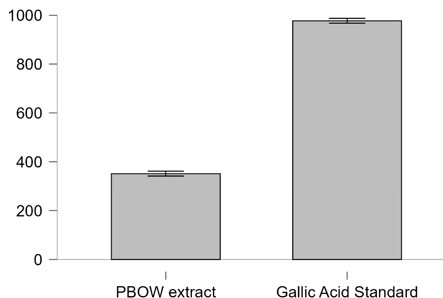
Fruit peels constitute a large fraction of agro-industrial waste and are rich in bioactive phytochemicals which represent a potential source of antioxidants for food waste valorization and nutraceutical applications. In this study, banana, pineapple, orange, and watermelon were collected, peels separated, shade-dried, milled, and homogenized to form a composite powder (BPOW) in 1:1:1:1 mass ratio, which was extracted with methanol and analyzed following AOAC guidelines. Phytochemical screening confirmed the presence of alkaloids, phenols, tannins, flavonoids, and terpenoids, with quantitative analysis revealing high concentrations of alkaloids (366.28 mg/g), phenols (351.86 mg/g), tannins (178.30 mg/g), and terpenoids (215.61 mg/mL). Antioxidant activity was evaluated using DPPH, ABTS, and FRAP assays, yielding potent results with DPPH IC50 at 0.0060 µg/mL, ABTS IC50 at 16.942 µg/mL, and FRAP reducing power at 351.43 µg/mL Trolox equivalents. These findings highlight strong phytochemical density and antioxidant potency. In conclusion, the BPOW composite emerges as a potential source of antioxidants with potential applications in nutraceuticals, functional foods, and circular economy strategies aimed at reducing food waste and creating value added substances. Further in vivo assessment and human trials are recommended to establish in vivo activities.
References
Abdelazem, R., Hefnawy, H., & El-Shorbagy, G. (2021). CHEMICAL COMPOSITION AND PHYTOCHEMICAL SCREENING OF Citrus sinensis(ORANGE) PEELS. Zagazig Journal of Agricultural Research, 48(3), 793–804. https://doi.org/10.21608/zjar.2021.191315
Alazaiza, M. Y. D., Bin Mokaizh, A. A., Baarimah, A. O., & Al-Zghoul, T. (2025). From agro-waste to bioactive wealth: Analyzing nutraceutical extraction and applications. Case Studies in Chemical and Environmental Engineering, 11(October 2024), 101066. https://doi.org/10.1016/j.cscee.2024.101066
Anwar, M. M. J. (2025). Advances in Green Technologies for Bioactive Extraction and Valorization of Agro-Waste in Food and Nutraceutical Industries. Haya: The Saudi Journal of Life Sciences, 10(05), 184–195. https://doi.org/10.36348/sjls.2025.v10i05.005
AOAC. (2019). Official Methods of Analysis, 21st Edition (2019) - AOAC International. Association of Official Analytical Chemists, Arlington, VA:
Basri, M. S. M., Nadiah, N., Karim, A., Sulaiman, A., Syafinaz, I., Amin, M., Zuhair, M., Nor, M., & Ariffin, S. H. (2021). Progress in the Valorization of Fruit and Vegetable Wastes : Technologies Used for Bioactive Compound Extraction. Polymers, 13, 3503–3540.
Capanoglu, E., Nemli, E., & Tomas-barberan, F. (2022). Novel Approaches in the Valorization of Agricultural Wastes and Their Applications. https://doi.org/10.1021/acs.jafc.1c07104
Caponio, G. R., Annunziato, A., Vacca, M., Difonzo, G., Celano, G., Minervini, F., Ranieri, M., Valenti, G., Tamma, G., & De Angelis, M. (2024). Nutritional, antioxidant and biological activity characterization of orange peel flour to produce nutraceutical gluten-free muffins. Food and Function, 15(16), 8459–8476. https://doi.org/10.1039/d4fo01395f
Dubey, S., Rajput, H., & Batta, K. (2021). Utilization of Watermelon Rind (Citrullus lanatus) in Various Food Preparations: A Review. Journal of Agricultural Science and Food Research, 12(1000), 5–7. https://doi.org/10.37273/chesci.cs205205361
Egbuna, C., Sawicka, B., & Khan, J. (2022). Food and Agricultural Byproducts as Important Source of Valuable Nutraceuticals. In Food and Agricultural Byproducts as Important Source of Valuable Nutraceuticals. https://doi.org/10.1007/978-3-030-98760-2
Gopalraaj, J., & Velayudhannair, K. (2025). A Comparative Study of Nutrient Composition, Proteolytic Activity, Phytochemical Profiles, Vitamin C Content, and Antioxidant Properties in the Peels of Selected Perennial Fruits. Agricultural Research, 14(4), 742–753. https://doi.org/10.1007/s40003-024-00798-4
Hagerman, A. . M. I. . & M. H. (2000). Quantification of tannins in tree foliage: A laboratory manual. FAO/IAEA.
Hiba K, F. A., Mary Markose, A., Gomez, S., V, A. T., & R, M. M. (2025). Unlocking the Nutritional Potential of Banana and Pineapple Peels asSustainable Sources of Food Fortificants. Sciences Research Journal of Agricultural Sciences, 16(01), 66–71.
Indumathi, D. . & V. K. (2014). Estimation of terpenoid content and its antimicrobial property in Enicostemma littorale. International Journal of PharmTech Research, 6(9), 4264–4267.
Johri, S., & Sharma, P. (2025). A review on the valorisation of fruits and vegetable agro-waste as nutrient, bioactive, and dietary sources The Pharma Innovation Journal 2025; 14(1): 85-90 A review on the valorisation of fruits and vegetable agro-waste as nutrient, bioactive, and dietar. 14(1), 85–90. https://www.researchgate.net/publication/388353278
Khanpit, V. V., Tajane, S. P., & Mandavgane, S. A. (2023). Orange waste peel to high value soluble dietary fiber concentrate: comparison of conversion methods and their environmental impact. Biomass Conversion and Biorefinery, 13(16), 14413–14423. https://doi.org/10.1007/s13399-022-02481-6
Limsuwan, S., Awaeloh, N., Na-phatthalung, P., & Kaewmanee, T. (2025). Exploring Antioxidant Properties of Standardized Extracts from Medicinal Plants Approved by the Thai FDA for Dietary Supplementation. 1–16.
Mafogang, B., Zingue, S., Kotue, C. T., Djouhou, M., Armand, F., Fomo, F., Ponka, R., & Fokou, E. (2025). Development and Comparative Evaluation of Two Polyherbal Nutraceuticals , BobyGuards A and B : Phytochemical Composition , Antioxidant Potential , and Nutritional Value. 2025. https://doi.org/10.1155/jfq/1971279
Makkar, H. P. . S. P. . & B. K. (2007). Methods in molecular biology: Plant secondary metabolites. NCBI Bookshelf.
Meda, A., Lamien, C. E., Romito, M., Millogo, J., & Nacoulma, O. G. (2005). Determination of the total phenolic, flavonoid and proline contents in Burkina Fasan honey, as well as their radical scavenging activity. Food Chemistry, 91(3), 571–577. https://doi.org/10.1016/j.foodchem.2004.10.006
Minarti, M., Ariani, N., Megawati, M., Hidayat, A., & Hendra, M. (2024). Potential Antioxidant Activity Methods DPPH , ABTS , FRAP , Total Phenol and Total Flavonoid Levels of Macaranga hypoleuca ( Reichb . f . & Zoll .) Leaves Extract and Fractions. 07005, 1–13.
Mishra, B., Mohanta, Y. K., Reddy, C. N., Reddy, S. D. M., Mandal, S. K., Yadavalli, R., & Sarma, H. (2023). Valorization of agro-industrial biowaste to biomaterials: An innovative circular bioeconomy approach. In Circular Economy (Vol. 2, Issue 3). https://doi.org/10.1016/j.cec.2023.100050
Neglo, D., Tettey, C. O., Essuman, E. K., Kortei, N. K., Boakye, A. A., Hunkpe, G., Amarh, F., Kwashie, P., & Devi, W. S. (2021). Comparative antioxidant and antimicrobial activities of the peels, rind, pulp and seeds of watermelon (Citrullus lanatus) fruit. Scientific African, 11, e00582. https://doi.org/10.1016/j.sciaf.2020.e00582
Olufunso, A. B., Comfort, B. D., Elizabeth, A. F., Olubukola, A. O., Celine, A. H., Temitope, A. B., Chibundo, O. C., & Sa, A. (2024). Peels of Edible Plants as Treasure Trove of Remarkable Nutraceutical Properties: Prospects for Medical Nutrition Therapy. EAS Journal of Nutrition and Food Sciences, 6(06), 184–196. https://doi.org/10.36349/easjnfs.2024.v06i06.005
Omoniyi, A. K., Ohunene, S. F., Taiwo, E. A., Abiola, I. B., & Ramat, A. J. (2026). GC-MS Based Phytochemical Profiling and Complementary Antioxidant Activities of Ethanol Extract of Garcinia kola Seeds Collected from Kogi State , Nigeria. FUDMA Journal of Sciences (FJS), 10(17), 26–30. https://doi.org/10.33003/fjs-2026-1017-6002
Owoeye, T. F., Akinlabu, D. K., Ajayi, O. O., Afolalu, S. A., Popoola, J. O., & Ajani, O. O. (2022). Phytochemical constituents and proximate analysis of dry pineapple peels. IOP Conference Series: Earth and Environmental Science, 993(1). https://doi.org/10.1088/1755-1315/993/1/012027
Sadiq, I. S., Saminu, M. Y., Zainab, L., Adeleye, A. O., Sanni, L. E., & Dandalma, Z. A. (2022). Proximate analysis and phytochemical screening of watermelon (citrullus lanatus) pulp, peels and seeds. Dutse Journal of Pure and Applied Sciences, 7(4a), 174–182. https://doi.org/10.4314/dujopas.v7i4a.18
Saiharini, N., & Padmaja, A. (2022). Studies on nutrient and phytochemical composition and assessment of in vitro antioxidant and enzyme inhibitory properties of watermelon fruit by-products. Annals of Phytomedicine: An International Journal, 11(1), 419–425. https://doi.org/10.54085/ap.2022.11.1.48
Skenderidis, P., Mitsagga, C., Giavasis, I., & Petrotos, K. (2019). The in vitro antimicrobial activity assessment of ultrasound assisted Lycium barbarum fruit extracts and pomegranate fruit peels. 0123456789.
Uzama, D., Okolo, S. C., Adebiyi, A. B., Okoh-Esene, R. U., Orishadipe, A. T., & Danlami, U. (2021). the Study of Phytochemicals, Proximate and Mineral Contents of Sweet Orange Seeds and Peels. Nigerian Journal of Chemical Research, 26(1), 2021.
Downloads
Published
Issue
Section
Categories
License
Copyright (c) 2026 Musa Umar Dirri, Adamu Jibrin Alhassan, Maryam Abdulkadir Dangambo

This work is licensed under a Creative Commons Attribution 4.0 International License.


