
Prevalence and Risk Factors of Helicobacter Pylori Infection among University Students in Maiduguri, Borno State, Nigeria
DOI:
https://doi.org/10.33003/fjs-2026-1022-6427Keywords:
Helicobacter Pylori, Seroprevalence, University Students, Associated Factors, Maiduguri, NigeriaAbstract
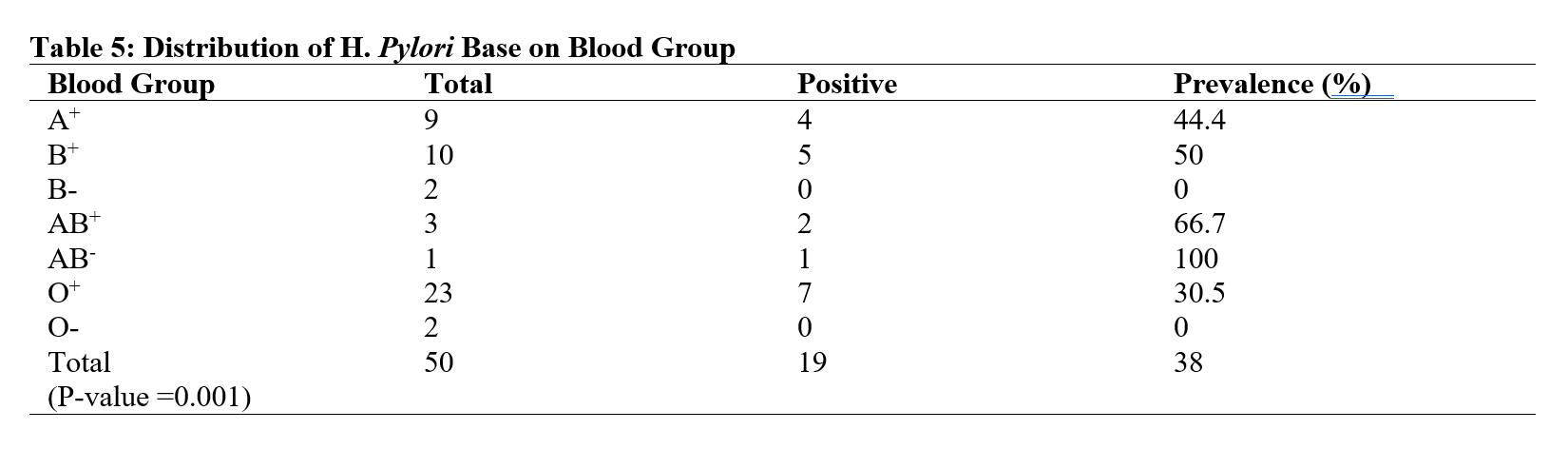
Helicobacter Pylori is associated with several upper gastrointestinal disorders and remains an important public health concern. Information on serological evidence of exposure among university students in Maiduguri is limited. This study assessed the seroprevalence of H. pylori antibodies and examined selected demographic and behavioural characteristics among university students in Maiduguri, Borno State, Nigeria. A cross-sectional study was conducted between June and August 2019 among 50 students comprising 28 males and 22 females. Blood samples were collected and screened for H. pylori antibodies using a rapid serological test. Participant characteristics, including age, sex, accommodation, blood group, dietary practices and handwashing frequency, were examined. Nineteen participants tested positive, giving an overall seroprevalence of 38.0%. Seropositivity was observed in 9 of 28 males (32.1%) and 10 of 22 females (45.5%). The corresponding proportions were 7 of 22 (31.8%) among students living on campus and 12 of 28 (42.9%) among those living off campus. Differences were also observed across other participant characteristics, although the reported statistical analyses require verification. The findings indicate serological evidence of previous or current H. pylori exposure among the sampled students. Because antibody testing cannot reliably distinguish active infection from previous exposure, further studies using validated tests for active infection and larger representative samples are recommended.
References
Adachi, T., Matsui, S.& Watanabe, T. (2017).Comparative study of clarithromycin- versus metronidazole-based triple therapy as firstline eradication for Helicobacter pylori.Oncology ;93( 1):15-19
Adeniyi, B.A., Otegbayo, J.A., Lawal, T.O., Oluwasola, A.O. &Odaibo. G.N. (2012) Prevalence of Helicobacter pylori Infection among Dyspepsia Patients in Ibadan, African Journal of Microbiology Research6(14): 3399-3402.
Agha, A. &Graham, I. (2005). Evidence-based examination of the African enigma in relation to H. Pylori infection. Scandenevia Journal of Gastroenterology. 40:523-529.
Alemohammad, M.M., Foley, T.J. & Cohen, H. (1993). Detection of immunoglobulin G antibodies to Helicobacter pylori in urine by an enzyme immunoassay method.Journal of Clinical Microbiology; 31: 2174-2177
Archampong, T.N., Asmah, R..H. &Aidoo.E..K. (2017). Helicobacter pylori cagA and vacAgenes in dyspeptic Ghanaian patients. BMC Res Notes;10:231.
Arthoncao, P., Peek, R..M., J.r, Tummuru, M., Blaser, M..J. & Cover, T.l. (1995). MaosicimInVacoulatingCytotoxin Alleles Of Helicobacter Pylori. Association of specific vac a types with cytoxin production and peptic ulceration.Journal of biology chemistry 270:17771-17777
Atherton, J.C.(1997-) The clinical relevance of strain types of Helicobacter pylori. Gut;40:701-3
Ayodele, A., Oseni, O. M. L., Joseph, A. O., Adeiza, Z. D., &Adeiza, A. M. (2026). Helicobacter pylori–Plasmodium falciparum co-infection in adults in Idah, Nigeria: Prevalence, risk factors, and molecular confirmation of H. pylori. Bioactive Molecules and Pharmaceuticals-Online ISSN: 2832-4528, 3(8), 150-164.
Bardhan, P.K. (1997) Epidemiological features of Helicobacter pylori infection in developing countries.Clinical Infectious Diseases; 25: 973–978
Bizri, A.R., Nuwayhid, I.A., Hamadeh, G.N., Steitieh, S.W., Choukair. A.M. &Musharrafieh.U.M. (2006). Association between hepatitis A virus and H. Pylori in a developing country: the saga continues. Journal Gastroenterology.Hepatol., 21,1615- 1621.
Blanchard, T.G. &Nedrud, J.G.(2010). Helicobacter pylori Vaccine “. In Sottonphilip; Mitchell, Hazel. Helocobacter pylori in the 21st century,pp.167-189
Blaser, M.J. (1997). Ecology of Helicobacter pylori in the human stomach.Journal Clinical Invest ; 100:759-62.
Blaser, M.J.(1995). The role of Helicobacter pylori in gastritis and its progression to peptic ulcer disease. Aliment PharmacolTher ;9(suppl l):27-30.
Blasér, M.J.(1999). Hypothesis: the changing relationships of Helicobacter pylori and humans: implications for health and disease. Journal Infectious Diseases; 179:1523-30.
Blum, F.C., Hu, H.Q. &Servetas, S.L. (2017). Structure-function analyses of metal-binding sites of HypA reveal residues important for hydrogenase maturation in Helicobacter pylori. PLoS ONE.;12(8):e0183260.
Braden, B., Teuber, G., Dietrich, CF., Caspary, W.F. &Lembcke, B. (2000) Comparison of new faecal antigen test with (13) Curea breath test for detecting Helicobacter pylori infection and monitoring eradication treatment: prospective clinical evaluation. BMJ 320: 14
Burgers, R., Schneider-Brachert, W., Reischl, U., Behr, A., Hiller, K.A., Lehn, N., Schmalz, G. &Ruhl, S. (2008). H. Pylori in human oral cavity and stomach. Eur. J. Oral. Sci., 116,297-302
Cheli, R., Crespi, M. &Testino, G.(1998) Gastric cancer and Helicobacter pylori: biologic and epidemiologic inconsisten- cies. -Journals Clinical Gastroenterology ;26:3-6.
Chey, W.D. & Wong, B.C.(2007) Practice Parameters Committee of the American College of Gastroenterology American College of Gastroenterology guideline on the management of Helicobacter pylori infection.. American Journal Gastroenterology 102: 1808- 1825.
Christopher, J.A, Abiodun, A.J., Olawale, OS, Abideen, OO &Adegboyega A (2010) Prevalence of Helicobacter Pylori among Nigerian Patients with Dyspepsia in Ibadan.Pan African Medical Journals 6(1): 18.
Clemens, J.(1996). Sociodemographic, hygienic and nutritional correlates of Helicobacter pylori infection of young Bangladeshi children. Pediatric Infectious Disease Journal, 15: 1113–1118
Danesh, J.(1998) Is there a link between chronic Helicobacterpylori infection and coronary heart disease? Eur J SurgSuppl 1998; 27-31.
Debowski, A.W., Walton, S.M. & Chua. E.G.(2017) Helicobacter pylori gene silencing in vivo demonstrates urease is essential for chronic infection. PLoS Pathog.;13(6):e1006464.
Dubois, A., Berg, D.E. &Incecik, E.T.(1996). Transient and persistent experimental infection of nonhuman primates with Helicobacter pylori: implications for human disease. Infectious Immun;64:2885-91
Dunn, B.E., Cohen, H. &Blaser, M.J.(1997) Helicobacter pylori. Clinical Microbiology Reviews, 10: 720–741
Dunne, C., Dolan, B. &Clyne, M.(2014) Factors that mediate colonization of the human stomach by Helicobacter pylori. World Journal Gastroenterology; 20: 5610-24
El Mortaji, L., Aubert, S. &Galtier., E.2018. The sole DEAD-Box RNA helicase of the gastric pathogen Helicobacter pylori is essential for colonization. mBio.9(2):e0207
Fallone, C.A.(1999) Determinants of ethnic or geographical differences in infectivity and transmissibility of Helicobacter pylori. Can J Gastroenterol;13:251-5
Falsafi, T., Valizadeh, N., Najafi, M., Ehsani, A., Khani, A., Landarani, Z. &Falahi, Z. (2007) Culture of Helicobacter pylori from stool samples in children. Can J Microbiol 53: 411-416.
Fashner, J. &Gitu, C.A. (2015) Diagnosis and Treatment of Peptic Ulcer Disease and H. pylori Infection, American Family Physician91(4): 236- 242.
Feng, J.R., Wang, F. &Qiu, X.(2017). Efficacy and safety of probioticsupplemented triple therapy for eradication of Helicobacter pylori in children: a systematic review and network meta-analysis. Eur J Clin Pharmacol.73:1199-1208
Folsom, A.R, Nieto, F.J.&Sorlie, P.(1998). Helicobacter pylori seropositivity and coronary heart disease incidence. Atherosclerosis Risk In Communities (ARIC) Study Investigators. Circulation ;98:845-50.
Fox, J.G.(1995). Non-human reservoirs of Helicobacter pylori. Aliment Pharmacol Ther;9(suppl 2):93-103.
Furuta, T.(1997). Study of transmission routes of Helicobacter pylori in relation to seroprevalence of hepatitis A virus.Journal of Clinical Microbiology, 35: 1891–1893.
Gail, M.H., You, W.C. & Chang, Y.S.(1998). Factorial trial of three interventions to reduce the progression of precancerous gas- tric lesions in Shandong, China: design issues and initial data. Control Clin Trials;19:352-69.
Gebara, E.C., Faria, C.M., Pannuti, C., Chehter., L., Mayer, M.P. & Lima, L.A (2006). Persistence of H. Pylori in the oral cavity after systemic eradication therapy.I Clin.Periodont., 33,329-333.
Ghoshal, U., Chaturvedi, R. & Correa, P. (2010) The enigma of H. Pylori and gastric cancer. Indian J. Gastroenterology.29- 95- 100.
Gisbert, J.P. &Pajares, J.M. (2004) Stool antigen test for the diagnosis of Helicobacter pylori infection: a systematic review. Helicobacter 9: 347-368
Goodman, K.J.(1996) Helicobacter pylori infection in the Colombian Andes: a population-based study of transmission paths. American Journal of Epidemiolsogy, 144: 290–299
Graham, D.Y.(1994) Benefits from elimination of Helicobacter pylori infection include major reduction in the incidence of peptic ulcer disease, gastric cancer, and primary gastric lym- phoma. Prev Med,23:712-16.
Graham, D.Y. & Klein, P.D. (2000) Accurate Diagnosis of Helicobacter pylori: 13C-Urea Breath Test. GastroenterolClin North Am 29: 885-893
Graham, D.Y., Klein, P.D., Evans, D.J., Jr, Evans, D.G, Alpert, L.C., Opekun, A.R. &Boutton,T.W (1987) Campylobacter pylori detected noninvasively by the 13C-urea breath test. Lancet 1: 1174-1177.
Greenberg, P.D. & Cello, J.P.(1999) Lack of effect of treatment for Helicobacter pylori on symptoms of nonulcer dyspepsia. Arch Intern Med;159:2283-8.
Handt, L.K., Fox, J.G. & Dewhirst, F.E (1994). Helicobacter pylori isolated from the domestic cat: public health implications. Infect Immun;62:2367-74.
Handt, L.K., Fox, J.G. &Stalis, M.(1995). Characterization of feline Helicobacter pylori strains and associated gastritis in a colony of domestic cats. J Clin Microbiol;33:2280-9
Hänninen, M.L. (1991) Sensitivity of Helicobacter pylori to different bile salts. Eur J ClinMicrobiol Infect Dis 10: 515- 518.
Hansen, S., Melby, K.K. &Aase, S.(1999). Helicobacter pylori infection and risk of cardia cancer and non-cardia gastric cancer.A nested case-control study.Scand J Gastroenterol;34:353-60.
Higuera, V. (2005) Peptic Ulcer, Healthline 1(1): 3-5.
Hooi, J.K.Y., Lai, W.Y. & Ng, W.K (2017). Global prevalence of Helicobacter pylori infection: systematic review and meta-analysis. Gastroenterology;153:420-429.
Hopkins, R.J., Vial, P.A. &Ferreccio, C. (1993).Seroprevalence of H. Pylori in Chile: vegetables es may serve as one route of transmission. J. Infect Dis., 168:222-6.
Hulten, K.(1996). Helicobacter pylori in the drinking water in Peru. Gastroenterology, 110: 1031–1035. IARC Working Group on the Evaluation of Carcinogenic Risks to ti.„“onogrSchistosomes, liver flukes and H. Pylori 7-14 June 1994, Lyon MK IV’ Eval. Carcinog. Risks Hum., 61:1-241.
Jaakkimainen, R.L., Boyle, E. &Tudiver,F.(1999) Is Helicobacter pylori associated with non-ulcer dyspepsia and will eradication improve symptoms? A meta-analysis. BMJ;319:1040-4.
Jekarl, D.W., An, Y.J., Lee, S., Lee, J., Kim, Y., Park ,Y.J., Kim, T.J., Kim, J.I. & Park, S.H. (2013) Evaluation of a newly developed rapid stool antigen test using an immunochromatographic assay to detect Helicobacter pylori. Jpn J Infect Dis 66: 60- 64
Jemikalajah, D.J. &Okogun, G.R.A. (2014) Health Point Prevalence of Helicobacter pylori in Central Hospital Warri, Nigeria.African Journal of the Cellular Pathology3(1): 57-60.
Jones, T.A., Hernandez, D.Z., Wong, Z.C., Wandler, A.M. &Guillemin, K. (2017) The bacterial virulence factor CagA induces microbial dysbiosis that contributes to excessive epithelial cell proliferation in the Drosophila gut. PLoSPathog;13(10):e1006631.
Kabamba, E.T. & Tuan, V.P.(2018) Yamaoka Y. Genetic populations and virulence factors of Helicobacter pylori. Infect Genet Evol;60: 109-116
Kabir, S. (2007). The current status of Helicobacter pylori vaccine: a review . Helicobacter ., 12(2):89-102.
Klein, P.D.(1991) Water source as risk factor for Helicobacter pylori infection in Peruvian children: Gastrointestinal Physiology Working Group. Lancet, 337: 1503–1506
Klein, P.D., Graham, D.Y., Gaillour, A., Opekun, A.R., O’Brian. & Smith, E.(1991) the Gastrointestinal Physiology Working Group. Water source as risk factor for H. Pylori infection in Peruvian children.Lancet., 337:1503-6.
Kornberg, H.L, Davies, R.E. & Wood, D.R. (1954) The activity and function of gastric urease in the cat. Biochem J 56: 363-372
Kusters, J.G., Arnoud, H.M. &Kuipers, E.J. (2006) Pathogenesis of Helicobacter Pylori Infection.ClinMicrobiol Rev 19(3): 449-490
Lambert, J.R., Lin, S.K. &Aranda-Michel, J.(1995) Helicobacter pylori. Scand J GastroenterolSuppl ,208:33-46. 6. Atherton JC. The clinical relevance of strain types of Helicobacter pylori. Gut 1997;40:701-3.
Lamrabet, O., Bekliz, M., Qumar, S., Sebastian, M., Abdurahman, U., Hamad, M.&Khoder, G. (2026). Helicobacter pylori In Free‐Living Amoebae: A Potential Environmental Reservoir for Persistence and Transmission. Environmental Microbiology Reports, 18(5), e70436.
Leja, M., Cine, E. &Rudzite, D.(2012) . Prevalence of Helicobacter pylori infection and atrophic gastritis in Latvia.Eur J Gastroenterol Hepatol;24:1410-1417
Lindkvist, P.(1996). Age at acquisition of Helicobacter pylori infection: comparison of a high and a low prevalence country. Scandinavian Journal of Infectious Diseases, 28: 181–184.
Lindkvist, P.(1998). Risk factors for infection with Helicobacter pylori— a study of children in rural Ethiopia. Scandinavian Journal of Infectious Diseases, 30: 371–376
Linz, B., Balloux, F. &Moodley, Y.(2007). An African origin for the intimate association between humans and H. Pylori.Nature., 445:915-8.
Mahmood, N. A., Mahmoud, O. R.&Younis, L. A. (2026). Helicobacter pylori Infection: From Pathogenesis to Clinical Management. Academia Open, 11(1), 10-21070.
Malaty, H.M.(1996).Helicobacter pylori and socioeconomic factors in Russia. Helicobacter, 1: 82–87
Malfertheiner, P., Link, A. &Selgrad, M.(2014) Helicobacter pylori: perspectives and time trends. Nat Rev GastroenterolHepatol 2014; 11: 628-38.
Malfertheiner, P., Megraud, F., O’Morain, C.A., Atherton, J., Axon, A.T.R., Bazzoli, F., Gensini, G.F., Gisbert. J.P., Graham. D.Y., Rokkas, T., El-Omar, E.M. &Kuipers, E.J.(2012) The Eur°P,wi Helicobacter Study Group (EHSG),Management of Helicobacter 01 infection — the Maastricht IV/ Florence Consensus Report. Gut., 61:646-664.
Malfertheiner., P., Megraud, F. &O’Morain, C.A.(2017). Management of Helicobacter pylori infection-the Maastricht V/Florence Consensus Report. Gut;66(1):6-30
Manes, G., Balzano, A., Iaquinto, G., Ricci, C., Piccirillo, M.M., Giardullo, N., Todisco, A., Lioniello, M. &Vaira, D. (2001) Accuracy of stool antigen test in posteradication assessment of Helicobacter pylori infection. Dig Dis Sci 46: 2440-2444
Marshall, B.J. & Surveyor. I. (1988) Carbon-14 urea breath test for the diagnosis of Campylobacter pylori associated gastritis. J Nucl Med 29: 11-16.
McColl, K.E.(1997)What remaining questions regarding Helicobacter pylori and associated diseases should be addressed by future research? View from Europe. Gastroenterology; 113: S158-S162.
Me´ graud, F.(1995) Epidemiology of Helicobacter pylori infection: where are we in 1995? European Journal of Gastroenterology and Hepatology, 7: 292–295.
Moriai, T. &Hirahara, N.(1999) Clinical course of acute gastric mucosal lesions caused by acute infection with Helicobacter pylori. (Letter). N Engl J Med;341:456-7.
Morshed, M.G., Islam, M.S., Zinnah, F., Rumi, M.A, Ahmad, M.M. &Huq, F. (1995) Growth of Helicobacter pylori in candle jar. Lancet 346: 511.
Mostaghni, A.A., Afarid, M., Eghbali, S. & Kumar, P. (2008) Evaluation of brushing cytology in the diagnosis of Helicobacter pylori gastritis.ActaCytol 52: 597-601
Mustafa, M., Menon, J., Muiandy, R.K., Fredie, R. &Sein, M.M. (2015) Risks Factors, Diagnosis, and Management of Peptic Ulcer Disease. Journal of Dental and Medical Sciences 14(7): 40-46.
Mynepalli, S.K.C., Maureen, O. &Mumuni, A. (2014) Prevalence of Helicobacter pylori and Hygiene Practices among Public Secondary School Students in Ikeja Local Government Area. Health 6(4): 250-258
Narváez, Rodríguez, I., Saez, d.eSantamaría, J., Alcalde, Rubio, M.M, Pascasio, Acevedo, J.M., PabónJaén, M., Campos,d.e., Orellana, A.M. Soria.&Monge, A. (1995) Cytologic brushing as a simple and rapid method in the diagnosis of Helicobacter pylori infection. ActaCytol 39: 916-919
Ndububa, D.A., Agbakwuru, A.E., Adebayo, R.A., Olasode, B.J., Olaomi, O.O. &Adeosun, O.A.(2001). Upper gastrointestinal findings and incidence of Helicobacter pylori infection among Nigerian patients with dyspepsia. West Afr J Med; 20(2):140-145. This article on PubMed
Neale, K.R. &Logan, R.P.H.(1995) The epidemiology and transmission of Helicobacter pylori infection in children. Alimentary Pharmacology and Therapeutics, 9 (Suppl. 2): 77–8
Nyren, O.(1998) Is Helicobacter pylori really the cause of gastric cancer?Semin Cancer Biol;8:275-83.
Oberg, S., Peters, J.H. &Nigro, J.J,(1999). Helicobacter pylori is not associated with the manifestations of gastroesophageal reflux disease. Arch Surg;134:722-6.
Oderda, G., Rapa, A. &Ronchi, B.(2000). Detection of Helicobacter pylori in stool specimens by non-invasive antigen enzyme immunoassay in children: multicentre Italian study. BMJ. 2000;320(7231):347-8.
Okoye, C. D., Caso, G. C., & Cover, T. L. (2026). Helicobacter pylori geographic variation: a window into global differences in gastric cancer incidence. Microbiology and Molecular Biology Reviews, 90(3), e00204-24.
Ossewaarde, J.M, Feskens, E.J, D.e. &Vries, A.(1998). Chlamydia pneumoniae is a risk factor for coronary heart disease in symptom-free elderly men, but Helicobacter pylori and cytomegalovirus are not. EpidemiolInfect ;120:93-9
Parente, F. & Bianchi, P.G.(1998) Helicobacter pylori infection and ischaemic heart disease: is there a link? Ital J GastroenterolHepatol ;30:119-23.
Peach, H.G., Pearce, D.C. &Farish, S.J.(1997) Helicobacter pylori infection in an Australian regional city: prevalence and risk factors. Medical Journal of Australia, 167: 310–313.
Ramas, M., Donday, M.G., McNicholl, A.G. &Gisbert, J.P.(2017) Efficacy and safety of rifaximin associated with standard triple therapy (omeprazole, clarithromycin and amoxicillin) for H. pylori eradication: a phase IV pilot clinical trial. Gastroenterol Hepatol;40:658-662.
Replogle, M.L., Glaser, S.L & Hiatt, R.A.(1995) Biologic sex as a risk factor for Helicobacter pylori infection in healthy young adults. Am J Epidemiol; 142:856-63.
Robinson, K., Letley, D.P. & Kaneko, K.(2017) The human stomach in health and disease: infection strategies by Helicobacter pylori. Curr Top MicrobiolImmunol; 400: 1-26
Rodríguez, d.e., Santiago, E., Martín, d.e., Argila,d.e., Prados, C., Marcos, &Prieto, H.M.(2017) Limited effectiveness with a 10-day bismuthcontaining quadruple therapy (Pylera(®)) in third-line rescue treatment for Helicobacter pylori infection. A real-life multicenter study. Helicobacter;22(5):e12423
Rothenbacher, D.(1997). Helicobacter pylori in out-patients of a general practitioner: prevalence and determinants of current infection. Epidemiology and Infection, 119: 151–157.
Rothenbacher, D., Bode, G. &Berg, G.(1999) H. Pylori among preschool children and their parents: evidence of parent-child transmission. J. Infect. Dis., 179:398-402.
Rudi, J.(1997) .Risk of infection with Helicobacter pylori and hepatitis A virus in different groups of hospital workers. American Journal of Gastroenterology, 92: 258–262
Schauer, D.B., Handwerker, J. & Correa, P.(1995) Detection of Helicobacter pylori in drinking water using polymerase chain reaction amplification. Gut, 37: A27
Schistosomes, (1994) liver flukes and Helicobacter pylori. IARC monographs on the evaluation of carcinogenic risks to humans. Vol. 61. Lyon, France: International Agency for Research on Cancer:177-241.
Schwarz, S., Morelli, G., Kusecek, B., Manica, A., Balloux, F., Owen, R.J., Graham, D.Y., van der, M.S., Achtman, M. &Suerbaum, S., (2008).Horizontal versus familial transmission of H. Pylori.PLoS Pathogens 4, el 000180
Selgrad, M. &Malfertheiner, P. (2008). New strategies for Helicobacter pylori eradication.CurrOpinPharmacology.,8(5): 593-7
Shimoyama, C. (2012). District loboratory practices in trophical countries, 1st edition Cambridge University Press, UK, 8(1):187-190.
Sipponen, P.(1997) Helicobacter pylori gastritis—epidemiology. J Gastroenterol ,32:273-7.
Smith, S.I., Seriki, A. &Ndip, R. , R. (2018).Pellicano.Helicobacter pylori infection in Africa: 2018 liyterature update. Minerva GastroenterolDietol; https://doi.org/10.23736/S1121-421X.18.02464-9 .In Press.
Stingl, K., Altendorf, K. & Bakker, E.P. (2002) Acid survival of Helicobacter pylori: how does urease activity trigger cytoplasmic pH homeostasis? Trends Microbiol 10: 70-74
Strachan, D.P., Mendall, M.A. & Carrington, D.(1998) . Relation of Helicobacter pylori infection to 13-year mortality and inci- dent ischemic heart disease in the caerphilly prospective heart disease study. Circulation 1998 ;98:1286-90.
Sugano, K., Hiroi, S. & Yamaoka, Y.(2018) Prevalence of Helicobacter pylori infection in Asia: remembrance of things past? Gastroenterology;154(1):257-258
Sullivan, P.B., Thomas, D.G., Wight, G., Neale, E.J., Eastham, T. &Corrah, T. (2009).Helicobacter pylori in Gambian children with chronic diarrhea and malnutrition. Arch Dis Child.,65(2): 189-91.
Talley, N.J, Newell, D.G., Ormand, J.E, Carpenter, H.A., Wilson, W.R., Zinsmeister, A.R., Perez-Perez, G.I. &Blaser, M.J. (1991) Serodiagnosis of Helicobacter pylori: comparison of enzymelinkedimmunosorbent assays. J ClinMicrobiol 29: 1635- 1639
Talley.N.J., Vakil, N. &Ballard, E.D.(1999).Absence of benefit of eradicating Helicobacter pylori in patients with nonulcer dyspepsia. N Engl J Med;341:1106-11.
Tang, T., Paz, E. A., Yu, K., Lee, K. H., Tay, C. Y., Wang, J.& Yang, Z. (2026). Current Helicobacter pylori Diagnostics: Established Methods, Resistance Testing, and Emerging Approaches. JGH Open, 10(9), e70461.
Tanih, N.F., Clarke N., Mkwetshana, E., Green, L.M. &Ndip, R.N.(2008). Helicobacter pylori infection .African journals of biotechnology.,7(5):4653-4662.
Tijjani, B. &Umar, A.(2008) Peptic Ulcer Disease and Helicobacter Infection at Kano, Nigeria. The Internet Journal of Gastroenterology 8(1): 1-4.
Vaira, D., Malfertheiner, P., Mégraud, F., Axon, A.T., Deltenre, M., Hirschl, A.M., Gasbarrini, G., O'Morain, C., Garcia, J.M, Quina, M. &Tytgat, G.N. (1999) Diagnosis of Helicobacter pylori infection with a new non-invasive antigen-based assay.HpSA European study group. Lancet 354: 30-33.
Van Zwet, A.A., Thijs, J.C., Kooistra-Smid, A.M., Schirm,J. &Snijder, J.A. (1993) Sensitivity of culture compared with that of polymerase chain reaction for detection of Helicobacter pylori from antral biopsy samples. J ClinMicrobiol 31: 1918- 1920.
Venerito, M., Vasapolli, R. &Malfertheiner, P.(2016) Helicobacter pylori and gastric cancer: timing and impact of preventive measures.AdvExp Med Biol; 908: 409-18.
Vollan, H.S., Tannaes, T., Caugant, D.A. &Vriend, G.(2017) Bukholm, G. Outer membrane phospholipase A’s roles in Helicobacter pylori acid adaptation. Gut Pathog;9:36
W.u J.C., Sung, J.J. &Ng, E.K.(1999). Prevalence and distribution of Helicobacter pylori in gastroesophageal reflux disease: a study from the East. Am J Gastroenterol;94:1790-4.
Wen, J., Wang. Y. &Gao, C.(2018) . Helicobacter pylori infection promotes Aquaporin 3 expression via the ROS-HIF-1alpha-AQP3-ROS loop in stomach mucosa: a potential novel mechanism for cancer pathogenesis. Oncogene.;37:3549-3561.
Wustner, S., Anderl, F. &Wanisch, A.(2017). Helicobacter pylori gammaglutamyltransferase contributes to colonization and differential recruitment of T cells during persistence. Sci Rep.;7(1):13636.
Xia, H.H. & Talley, N.J.(1997) Natural acquisition and spontaneous elimination of Helicobacter pylori infection: clinical implications. Am J Gastroenterol;92:1780-7.
Ynepalli, S.K.C., Maureen, O.&Mumuni, A (2014) Prevalence of Helicobacter pylori and Hygiene Practices among Public Secondary School Students in Ikeja Local Government Area. Health 6(4): 250-258.
Zamani, M., Ebrahimtabar, F. & Zamani, V.(2018). Systematic review with meta-analysis: the worldwide prevalence of Helicobacter pylori infection. Aliment PharmacolTher. 2018;47:868-876
Zhang, Y.Y., Xia, H.H.X., Zhuan, Z.H.&Zhong, J. (2009). Review article: “True” re-infection of H. Pylori after successful eradication: worldwide annual rates, risk factors and clinical implications. Aliment PharrnacolTher., 29(2):145-60
Downloads
Published
Issue
Section
Categories
License
Copyright (c) 2026 Muhammad Buba, Haruna Yahaya Ismail, Abdulwahab Musa, Morufat Lasisi, Farouq Abba Ali, Fatima Mala Daura

This work is licensed under a Creative Commons Attribution 4.0 International License.


