
Comparative In Vitro Antihaemolytic Activity of Uvaria chamae leave and stem Fractions Against Echis ocellatus and Naja nigricollis Venoms
DOI:
https://doi.org/10.33003/fjs-2026-1023-6511Keywords:
Uvaria chamae, Echis ocellatus, Naja nigricollis, antihaemolytic activity, phytochemical screening, acute toxicity, snakebite envenomationAbstract
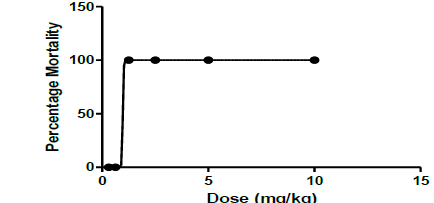
Snakebite envenomation remains a major public health concern globally. This study evaluated the in vitro antihaemolytic activity of methanol extract of Uvaria chamae leaves and stem fractions (n-hexane, ethyl acetate, n-butanol, and aqueous) against Echis ocellatus and Naja nigricollis venoms. Antihaemolytic activity was evaluated using the fractions at concentrations of 100, 50, and 25 mg/mL. The ethyl acetate fraction showed strong qualitative reactions for tannins, phenolic compounds, and flavonoids. The LD50 of the crude methanol extract exceeded 5,000 mg/kg body weight, with no mortality observed at the tested dose. Against E. ocellatus venom, the n-hexane fraction demonstrated antihaemolytic activities of 89%, 76%, and 83% at 100, 50, and 25 mg/mL, respectively. The butanol fraction recorded 86%, 22%, and 46%, while the ethyl acetate fraction exhibited 85%, 76%, and 76%, respectively. The aqueous fraction demonstrated 87%, 84%, and 55% activity at the corresponding concentrations. Against N. nigricollis venom, the aqueous fraction exhibited the highest antihaemolytic activity (75 %) at 100 mg/mL, followed by the ethyl acetate (63%), n-hexane (54 %), and butanol (11 %) fractions. At 50 and 25 mg/mL, the aqueous fraction recorded 55 % and 43%, respectively, while the ethyl acetate fraction demonstrated 55 % and 44%. The n-hexane fraction recorded 53 % and 52 %, whereas the butanol fraction exhibited 47% and 40%, respectively. The findings demonstrate varying in vitro antihaemolytic activities of U. chamae leave and stem fractions against both venoms, potentially associated with differences in phytochemical composition
References
Abubakar, A. R., & Haque, M. (2020). Preparation of medicinal plants: Basic extraction and fractionation procedures for experimental purposes. Journal of Pharmacy and Bioallied Sciences, 12(1), 1–10. https://doi.org/10.4103/jpbs.JPBS_175_19
Adeyi, A. O., Emmanuel, O. S., Itang, S. I., Ajisebiola, B. S., Kumar, M., Rudresha, G. V., Gond, P. G., Crasset, T., Redureau, D., Amorim, F. G., Sunagar, K., & Quinton, L. (2026). Preliminary insights into geographic variation in venom profiles and functional activities of Nigerian snakes, Bitis arietans and Naja nigricollis. Toxins, 18(5), 221. https://doi.org/10.3390/toxins18050221
Alshammari, A. M. (2022). Snakebite envenoming: A comprehensive review on epidemiology, diagnosis, potential treatments, role of proteomics and bioinformatics. International Journal of Pharmaceutical Research and Allied Sciences, 11(3), 108-122. https://doi.org/10.51847/A2sV76stWe
Alvitigala, Y., Dissanayake, H., Weeratunga, P., Padmaperuma, P., & Gooneratne, L. (2025). Haemotoxicity of snakes: A review of pathogenesis, clinical manifestations, novel diagnostics and challenges in management. Transactions of the Royal Society of Tropical Medicine and Hygiene, 119, 283-303.
Anjali, K. M., Raghav, A., Chauhan, A. S., & Kumar, P. (2026). Natural terpenes: An overview of structural diversity and multifunctional applications. Journal of Applied Pharmaceutical Science, 16(4), 79-91. https://doi.org/10.7324/JAPS.2026.274026
Basyuni, M., Ikhtiari, R., Larekeng, S., Suyanto, A., Illian, D., Wahyuni, T., Baba, S., & Omoto, R. (2026). Phytosterols from mangroves: Bridging plant stress physiology with human nutrition and health benefits. https://doi.org/10.52305/GQUJ3224
Dine, F., Taha, S. H. N., Abdel-Rahman, S., Elnaggar, F., Fasfous, M., Gebreal, A., Kengo, N. E., Gaitan, G., Okafor, U., Benti, A., Mahmoud, M., Bonnah, S., Jama, S., Turay, A., Michael, O., Mohammad, A., & Ghazy, R. (2026). Assessment of knowledge, attitude, and practice of healthcare providers regarding snakebite envenomation: A cross-sectional study among Sub-Saharan African countries. Annals of Medicine, 58. https://doi.org/10.1080/07853890.2026.2684168
Dingwoke, E., Adis, A., Salihu, A., Abubakar, M., & Sallau, A. (2024). Toxicological analyses of the venoms of Nigerian vipers Echis ocellatus and Bitis arietans. Tropical Medicine and Health, 52. https://doi.org/10.1186/s41182-024-00581-9
Ediriweera, D. S., Kasturiratne, A., Pathmeswaran, A., Stienstra, Y., Martín, G., Iwamura, T., Murray, K. A., de Silva, H. J., Diggle, P. J., & Lalloo, D. G. (2026). Estimates of global burden of snakebite: A literature review and geostatistical modelling study. PLOS Medicine, 23(8), Article e1005201. https://doi.org/10.1371/journal.pmed.1005201
Enin, G. N., Shaibu, S. E., Ujah, G. A., Ibu, R. O., & Inangha, P. G. (2021). Phytochemical and nutritive composition of Uvaria chamae P. Beauv. leaves, stem bark and root bark. ChemSearch Journal, 12(1), 9-14. https://www.ajol.info/index.php/csj/article/view/209958
Enin, G., Shaibu, S., Ujah, G., Ibu, R., & Inangha, P. (2021). Phytochemical and nutritive composition of Uvaria chamae P. Beauv. leaves, stem bark and root bark. [Journal Name], 1, 9-12.
Gomes, A., & Pallabi, D. E. (1999). Hannahpep: A novel fibrinolytic peptide from the Indian king cobra (Ophiophagus hannah) venom. Biochemical and Biophysical Research Communications, 266(2), 488-491.
Habib, A. G. (2015). Venomous snakes and snake envenomation in Nigeria. In P. Gopalakrishnakone, A. Faiz, R. Fernando, C. Gnanathasan, A. Habib, & C. C. Yang (Eds.), Clinical toxinology in Asia Pacific and Africa (Toxinology, Vol. 2). Springer. https://doi.org/10.1007/978-94-007-6386-9_32
Hounsou, K. E., Sovegnon, T., Houngnihin, R. A., Quinet, M., & Gandonou, C. B. (2026). From folk medicine to therapeutic innovation: A narrative review of the ethnomedicinal uses, bioactive constituents, and antidiabetic and anti-infective potential of Uvaria chamae P. Beauv. (Annonaceae). Journal of Phytomedicine, 1(3), 11. https://doi.org/10.3390/jphytomed1030011
Isaac, O., Kwaku, A., Jalo, R., Tsiga-Ahmed, F., Ibrahim, U., Sunusi, S., Amole, T., Shuaibu, S., Abdullahi, H., & Abubakar, I. (2026). Barriers to timely care associated with complications of snakebite envenomation amongst farmers in northeastern Nigeria. Nigerian Postgraduate Medical Journal, 33, 299-305. https://doi.org/10.4103/npmj.npmj_365_25
Kokab, A., Manshoor, N., Ullah, I., Arshad, M., Zamin, M., & Ahmad, S. (2026). Exploring of phytochemical diversity in medicinal plants. Frontier in Medical and Health Research, 4(3), 15-31. https://doi.org/10.5281/zenodo.18859417
Macfarlane, R. G. (1967). Russell's viper venoms, 1953-1964. British Journal of Haematology, 13, 437-451.
Mao, Y.-C., Liu, P.-Y., Lai, K.-L., Luo, Y., Chen, K.-T., & Lai, C.-S. (2025). Clinical Characteristics of Snakebite Envenomings in Taiwan. Toxins, 17(1), 14. https://doi.org/10.3390/toxins17010014
Migliorisi, A., Johnson, T., Nelson, T., Elane, G. L., Ueda, Y., & Hobbs, K. J. (2026). Snake envenomation in veterinary medicine: Comparative insights and emerging therapies. Frontiers in Veterinary Science, 13, Article 1750963. https://doi.org/10.3389/fvets.2026.1750963
Nanyonga, S., Matafwali, S., Kibira, D., & Kitutu, F. (2025). Treatment and treatment outcomes of snakebite envenoming in Uganda: A retrospective analysis. Transactions of the Royal Society of Tropical Medicine and Hygiene, 119, 796-803.
OECD (2008). Test No. 425: Acute Oral Toxicity: Up-and-Down Procedure. OECD Guidelines for the Testing of Chemicals, Section 4. Paris: Organisation for Economic Co-operation and Development (OECD). https://doi.org/10.1787/9789264071049
Opiyo, S., & Njoroge, P. (2024). Plant extracts and terpenes with antivenom properties. IOSR Journal of Applied Chemistry, 17, 31-41.
Preliminary insights into geographic variation in venom profiles and functional activities of Nigerian snakes, Bitis arietans and Naja nigricollis. Toxins, 18(5), Article 221.
Singh, D. D., Yadav, D. K., & Shin, D. (2026). Phytochemicals and redox modulation: Molecular mechanisms, clinical relevance, and therapeutic perspectives. Antioxidants, 15(2), 272. https://doi.org/10.3390/antiox15020272
Singh, P., Yasir, M., Hazarika, R., Sugunan, S., & Shrivastava, R. (2017). A review on venom enzymes neutralizing ability of secondary metabolites from medicinal plants. Journal of Pharmacopuncture, 20(3), 173-178. https://doi.org/10.3831/KPI.2017.20.020
Stienstra, Y., Clevering, Y., Kokhuis, S., Amuasi, J. H., Padidar, S., Schurer, J. M., Mijumbi, R., Thomson, R., Oluoch, G. O., Mbonigaba, J. B., & Lalloo, D. G. (2026). Did the WHO recognition of snakebite as a neglected tropical disease impact national NTD master plans in 15 African countries? Toxicon, 270, Article 108935. https://doi.org/10.1016/j.toxicon.2025.108935
Tong, D., Chen, L., & Xu, J. (2026). Multidimensional toxicity of snake venom causes multi-organ damage and treatment challenges: A narrative review. Frontiers in Pharmacology, 17, Article 1815953. https://doi.org/10.3389/fphar.2026.1815953
Truong, Q. Q. B., Rae, J., Nguyen, P. T. N., Nguyen, T. T. T., Vo, V. T., May, J., Krumkamp, R., Dang, T. A. T., Blessmann, J., & Kreuels, B. (2026). The disease that bites - An assessment of demographics, clinical characteristics, and treatment practices of patients with snakebite envenoming across Vietnam. Journal of Global Health, 16, 04225.
Ugwu, C., Okorie, N., Ali, I., Ugodi, G., & Attama, A. (2026). Antilipidemic activity and phytochemical properties of methanol extract and fractions of Sphenostylis stenocarpa seeds. Tropical Journal of Phytochemistry and Pharmaceutical Sciences. https://doi.org/10.26538/tjpps/v5i2.3
Published
Issue
Section
Categories
License
Copyright (c) 2026 Ada Gabriel, Dahiru Sani, Yusuf Peter Ofemile, Mohammed Garba Magaji, Dennis Otie, Yusuf Abdulraheem Oniwapele, Bwala Hyeladzira Yusuf, Ahmad Abdulganiyyu Abdullahi

This work is licensed under a Creative Commons Attribution 4.0 International License.


