
GC–MS and HPLC Profiling and In vitro Antibacterial Activity of Hydromethanolic Stem-Bark Extract of Antiaris toxicaria var. africana Scott-Elliot ex A.Chev. (Moraceae)
DOI:
https://doi.org/10.33003/Keywords:
Antiaris toxicaria var. africana; stem-bark extract; GC–MS profiling; HPLC analysis; antibacterial activity; minimum inhibitory concentrationAbstract
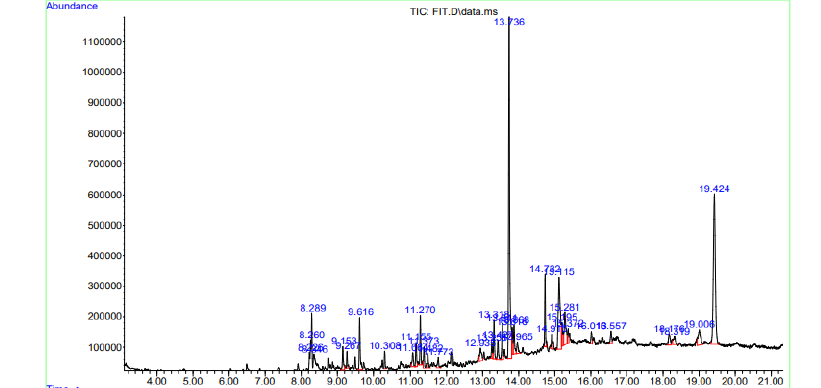
Medicinal plants are important sources of structurally diverse natural products with potential pharmaceutical applications. This study investigated the preliminary chemical profile and in vitro antibacterial activity of the 70% methanolic (hydromethanolic) stem-bark extract of Antiaris toxicaria var. africana. Chemical profiling was performed using gas chromatography–mass spectrometry (GC–MS) and high-performance liquid chromatography (HPLC), while antibacterial activity against six bacterial species was evaluated using agar well diffusion and minimum inhibitory concentration (MIC) assays. GC–MS analysis yielded 31 chromatographic entries, with n-hexadecanoic acid (25.24%) and (Z)-methyl heptadec-9-enoate (9.03%) recording the highest relative peak areas. Other notable tentative assignments included octadecanoic acid, 11-octadecenoic acid methyl ester and 2,4-di-tert-butylphenol. HPLC peaks were tentatively assigned to flavonoids, phenolic groups, alkaloids, cardiac glycosides and other chemical classes. The extract produced inhibition zones of 15–17 mm against Staphylococcus aureus, Escherichia coli, Pseudomonas aeruginosa, Bacillus subtilis and Enterobacter cloacae, but showed no measurable inhibition against Bacillus cereus. The MIC was 20 mg/mL for the five susceptible organisms and greater than 40 mg/mL for B. cereus. Although ciprofloxacin produced larger inhibition zones (28–40 mm), direct potency comparison was precluded by the substantially different concentrations tested. These findings demonstrate preliminary, organism-dependent antibacterial activity. However, tentative chromatographic assignments, unavailable validated HPLC calibration data and limited experimental replication constrain interpretation. Further analytical confirmation, quantitative characterisation, bioactivity-guided fractionation and toxicity assessment are necessary to establish the extract's chemical composition, antibacterial potential and safety.
References
Abdul, I. H., Wudil, A. M., & Yusuf, A. (2026). Acute oral toxicity of an alkaloid-rich fraction of Nauclea diderrichii stem bark in Wistar rats: Biochemical and histopathological evaluation. FUDMA Journal of Sciences, 10(17), 285–292. https://doi.org/10.33003/fjs-2026-1017-6053
Afolayan, A. J., & Meyer, J. J. M. (1997). The antimicrobial activity of 3,5,7-trihydroxyflavone isolated from the shoots of Helichrysum aureonitens. Journal of Ethnopharmacology, 57, 177–181. https://doi.org/10.1016/S0378-8741(97)00065-2
Aiwonegbe, A. E., Akhidenor, F. I., Enobakhare, P. O., Agbonavbare, B. O., Gabriel, B. O., Oke, A. M., & Odion, E. E. (2025). Phytochemical constituents, antioxidant potential, acute toxicity and antimicrobial activity of the methanol extract of Trichosanthes cucumerina L. (Cucurbitaceae) plant cultivated in Benin City, Nigeria. Scientia Africana, 24(3), 239–250. https://doi.org/10.4314/sa.v24i3.22
Aiwonegbe, A. E., & Ativie, G. (2023). Antioxidant capacity, total phenolic and total flavonoid contents of the methanol extract of Alchornea cordifolia (Christmas bush) leaves. FUW Trends in Science & Technology Journal, 8(3), 28–32. www.ftstjournal.com
Aiwonegbe, A. E., Omoruyi, U., Ogbeide, O. K., Imoukhuede, B. O., & Gabriel, B. O. (2022). Anxiolytic effects, antioxidant and anti-inflammatory activities of the methanol extract of Jatropha tanjorensis leaf. Tanzania Journal of Science, 48(3), 596–606. https://doi.org/10.4314/tjs.v48i3.7
Akpotu, J. O., & Udi, M. (2026). Bactericidal potentials of garlic (Allium sativum) and onion (Allium cepa) paste on microbial quality and shelf life of Nile tilapia (Oreochromis niloticus). FUDMA Journal of Sciences, 10(17), 253–260. https://doi.org/10.33003/fjs-2026-1017-4991
Balouiri, M., Sadiki, M., & Koraichi Ibnsouda, S. (2016). Methods for in vitro evaluating antimicrobial activity: A review. Journal of Pharmaceutical Analysis, 6(2), 71–79. https://doi.org/10.1016/j.jpha.2015.11.005
Banso, A., & Mann, A. (2008). Evaluation of antibacterial properties of flavonoid fraction from Antiaris africana (Engl.). Journal of Applied Biosciences, 12, 665–670. www.biosciences.elewa.org
Berida, T. I., Adekunle, Y. A., Dada-Adegbola, H. O., Kdimy, A., Roy, S., & Sarker, S. D. (2024). Plant antibacterials: The challenges and opportunities. Heliyon, 10, e31145. https://doi.org/10.1016/j.heliyon.2024.e31145
Çiçek, S. S., Mangoni, A., Hanschen, F. S., Agerbirk, N., & Zidorn, C. (2024). Essentials in the acquisition, interpretation, and reporting of plant metabolite profiles. Phytochemistry, 220, 114004. https://doi.org/10.1016/j.phytochem.2024.114004
Ding, D., Wang, Y., He, J., Gao, J., Xu, Z., Dou, Y., Guo, L., Ji, X., Shu, M., & Yue, T. (2025). Review of pretreatment and analytical methods for environmental endocrine disruptors: Phthalates. Environmental Toxicology and Chemistry, 44, 1165–1186. https://doi.org/10.1093/etojnl/vgaf032
GBD 2021 Antimicrobial Resistance Collaborators. (2024). Global burden of bacterial antimicrobial resistance 1990–2021: A systematic analysis with forecasts to 2050. The Lancet, 404(10459), 1199–1226. https://doi.org/10.1016/S0140-6736(24)01867-1
Ilesanmi, O., Akinmoladun, A., Elusiyan, C., Ogungbe, I. V., Olugbade, T., & Olaleye, T. (2021). Neuroprotective flavonoids of the leaf of Antiaris africana Engl. against cyanide toxicity. Journal of Ethnopharmacology, Article 114592. https://doi.org/10.1016/j.jep.2021.114592
Ilesanmi, O. B., Olaleye, T. M., Akinmoladun, A. C., & Alawode, T. T. (2016). HPLC quantification of phenolic content and assessment of methanolic extract of Antiaris africana for toxicological study. African Journal of Biotechnology, 15(9), 320–330. https://doi.org/10.5897/AJB2015.14825
Kaisoon, O., Konczak, I., & Siriamornpun, S. (2011). Potential health enhancing properties of edible flowers from Thailand. Food Research International, 46(2), 563–571. https://doi.org/10.1016/j.foodres.2011.06.016
Kew Science. (2026). Antiaris toxicaria var. africana Scott Elliot ex A.Chev. Plants of the World Online. https://powo.science.kew.org/taxon/urn:lsid:ipni.org:names:77249502-1
Li, Y. (2023). Analytical methods for the analysis of volatile natural products. Natural Product Reports, 40(4), 922–956. https://doi.org/10.1039/D2NP00079B
Nazzaro, F., Coppola, F., Fratianni, F., & Coppola, R. (2026). Fatty acids as prebiotics and their role in antibiofilm activity. Antibiotics, 15, 57. https://doi.org/10.3390/antibiotics15010057
Rouvier, F., Abou, L., Wafo, E., André, P., Cheyrol, J., Khacef, M.-M., Nappez, C., Lepidi, H., & Brunel, J.-M. (2024). Identification of 2,4-di-tert-butylphenol as an antimicrobial agent against Cutibacterium acnes bacteria from Rwandan propolis. Antibiotics, 13(11), Article 1080. https://doi.org/10.3390/antibiotics13111080
Seenivasan, A., Manikkam, R., Kaari, M., Sahu, A. K., Said, M., & Dastager, S. G. (2022). 2,4-Di-tert-butylphenol (2,4-DTBP) purified from Streptomyces sp. KCA1 from Phyllanthus niruri: Isolation, characterization, antibacterial and anticancer properties. Journal of King Saud University – Science, 34(5), Article 102088. https://doi.org/10.1016/j.jksus.2022.102088
Shattock, M. J., Ottolia, M., Bers, D. M., Blaustein, M. P., Boguslavskyi, A., Bossuyt, J., Chen-Izu, Y., Clancy, C. E., Edwards, A., Goldhaber, J., Bridge, J. H. B., Kaplan, J., Lingrel, J. B., Pavlovic, D., Philipson, K. D., Sipido, K. R., & Xie, Z.-J. (2015). Na⁺/Ca²⁺ exchange and Na⁺/K⁺-ATPase in the heart. The Journal of Physiology, 593(6), 1361–1382. https://doi.org/10.1113/jphysiol.2014.282319
Shi, L.-S., Liao, Y.-R., Su, M.-J., Lee, A.-S., Kuo, P.-C., Damu, A. G., Kuo, S.-C., Sun, H.-D., Lee, K.-H., & Wu, T.-S. (2010). Cardiac glycosides from Antiaris toxicaria with potent cardiotonic activity. Journal of Natural Products, 73(7), 1214–1222. https://doi.org/10.1021/np9005212
Sundar, R. D. V., & Arunachalam, S. (2025). 2,4-Di-tert-butylphenol from endophytic fungi Fusarium oxysporum attenuates the growth of multidrug-resistant pathogens. Frontiers in Microbiology, 16, Article 1575021. https://doi.org/10.3389/fmicb.2025.1575021
Torun, Z., Ünver, T., Uslu, H., & Göktaş, B. (2026). Exploring antimicrobial activities of fixed oil from Sanguisorba minor seeds by in vitro and in silico analysis. ChemistryOpen, 15, e70250. https://doi.org/10.1002/open.70250
Ugboko, H. U., Nwinyi, O. C., Oranusi, S. U., Fatoki, T. H., & Omonhinmin, C. A. (2020). Antimicrobial importance of medicinal plants in Nigeria. The Scientific World Journal, 2020, Article 7059323. https://doi.org/10.1155/2020/7059323
Venugopal, A., Sathyamoorthy, S., Renitta, E., Sathyamurthy, D., Keshri, V., Kanivebagilu, V. S., & Sevanan, M. (2026). Comparative in-silico docking, pharmacokinetic characterization, and antimicrobial evaluation of 2,4-DTBP and chlorhexidine against gingivitis-associated oral pathogens. Journal of Applied Pharmaceutical Science, 16, 244–254. https://doi.org/10.7324/japs.2026.272831
Vouffo, B., Dongo, E., Facey, P., Thorn, A., Sheldrick, G., Maier, A., Fiebig, H. H., & Laatsch, H. (2010). Antiarol cinnamate and africanoside, a cinnamoyl triterpene and a hydroperoxy-cardenolide from the stem bark of Antiaris africana. Planta Medica, 76(15), 1717–1723. https://doi.org/10.1055/s-0030-1249958
Whelan, L. C., Geary, M., & Healy, J. (2022). A novel, simple rapid reverse-phase HPLC-DAD analysis for the simultaneous determination of phenolic compounds and abscisic acid commonly found in foodstuff and beverages. Journal of Chromatographic Science, 60(7), 648–654. https://doi.org/10.1093/chromsci/bmab114
Woo, S., Marquez, L., Crandall, W. J., Risener, C. J., & Quave, C. L. (2023). Recent advances in the discovery of plant-derived antimicrobial natural products to combat antimicrobial resistant pathogens: Insights from 2018–2022. Natural Product Reports, 40(7), 1271–1290. https://doi.org/10.1039/D2NP00090C
World Health Organization. (2025a). Global antibiotic resistance surveillance report 2025: Summary. Global Antimicrobial Resistance and Use Surveillance System (GLASS).
World Health Organization. (2025b). Global traditional medicine strategy 2025–2034. World Health Organization.
Xu, F., Xie, Y., Yu, W., & Wang, Z. (2026). Breaking the outer membrane barrier: Structure, targets, and antimicrobial strategies for Gram-negative bacteria. Frontiers in Microbiology, 17, Article 1734749. https://doi.org/10.3389/fmicb.2026.1734749
Downloads
Published
Issue
Section
Categories
License
Copyright (c) 2026 Anthony Egbeyanebhonlen Aiwonegbe; Theophilus Omogbai

This work is licensed under a Creative Commons Attribution 4.0 International License.


