
Effects of Aqueous Kigelia africana Fruit Extract on Glycaemic, Hepatic, Lipid, Haematological and Histopathological Indices in Streptozotocin-Induced Diabetic Rats
DOI:
https://doi.org/10.33003/fjs-2026-1023-6555Keywords:
Kigelia africana, diabetes mellitus, hypolipidaemic, streptozotocin, hypoglycemic effect, nephropathy, haematological parameters, Wistar ratsAbstract
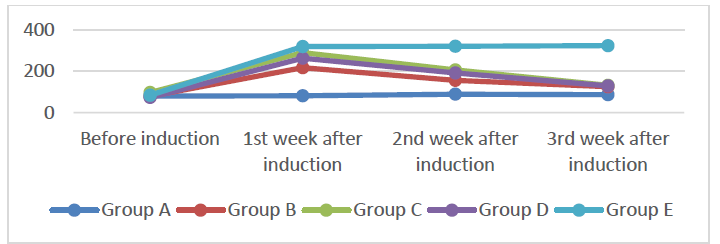
Diabetes mellitus is a chronic metabolic disorder characterised by persistent hyperglycaemia and associated alterations in lipid metabolism, liver function, haematological indices and tissue integrity. This study investigated the effects of aqueous fruit extract of Kigelia africana on blood glucose levels, liver marker enzymes, lipid profile, selected haematological parameters, and histopathological changes in streptozotocin-induced diabetic Wistar albino rats. Five groups were used: Group A (normal control), Groups B and C (200 and 400 mg/kg body weight K. africana extract), Group D (metformin), and Group E (negative control). Diabetes was induced with streptozotocin. We assessed blood glucose, serum liver enzymes, lipid profile, and haematological parameters using standard methods; we also examined liver and kidney histopathology.
Untreated diabetic rats showed marked hyperglycaemia, elevated liver enzymes, increased total cholesterol, triglycerides and LDL, reduced HDL, and decreased PCV, haemoglobin, WBC and RBC. K. africana extract significantly ameliorated these changes. Blood glucose fell from 218.0 ± 6.25 to 125.0 ± 5.36 mg/dL (200 mg/kg) and from 291.0 ± 4.50 to 132.0 ± 3.15 mg/dL (400 mg/kg). Liver enzymes and lipid parameters improved compared with untreated controls. Haematological indices improved, with the 400 mg/kg dose generally superior (except WBC). Extract-treated groups had better-preserved liver and kidney architecture than untreated diabetics.
One-way ANOVA detected significant changes. Aqueous K. africana fruit extract showed hypoglycaemic, protective, hypolipidaemic, haematoprotective and tissue-protective effects in streptozotocin-induced diabetic rats and may serve as a complementary source of bioactive compounds for managing diabetes-associated complications, pending further studies on active constituents, mechanisms and safety
References
Atawodi, S. E. O., & Olowoniyi, O. D. (2014). Pharmacological and therapeutic activities of Kigelia africana (Lam.) Benth. Annual Research & Review in Biology, 5(1), 1–17.
Azu, O., Duru, F., Osinubi, A., Noronha, C., Elesha, S. O., & Okanlawon, A. O. (2010). Preliminary study on the antioxidant effect of Kigelia africana fruit extract (Bignoniaceae) in male Sprague-Dawley rats. African Journal of Biotechnology, 9(9), 1374–1381.
Bancroft, D. J., & Gamble, M. (2008). Theory and practice of histological techniques (6th ed.). Churchill Livingstone/Elsevier.
Burcelin, R., Eddouks, M., Maury, J., Kande, J., Assan, R., & Girard, J. (1995). Excessive glucose production, rather than insulin resistance, accounts for hyperglycemia in recent-onset streptozotocin-diabetic rats. Diabetologia, 38(3), 283–290.
Clark, L. C., Jr., & Lyons, C. (1962). Electrode systems for continuous monitoring in cardiovascular surgery. Annals of the New York Academy of Sciences, 102(1), 29–45.
Emran, T., Rahman, M. A., Uddin, M. M. N., Rahman, M., Uddin, M., Dash, R., & others. (2015). Effects of organic extracts and their different fractions of five Bangladeshi plants on in vitro thrombolysis. BMC Complementary and Alternative Medicine, 15, 1–8.
Fagbohun, O. F., Babalola, O. O., Agboola, F. K., Joseph, J. S., Malindisa, S., & Msagati, T. A. M. (2020). Evaluation of phytochemicals, antioxidants, trace elements in Kigelia africana fruit extracts and chemical profiling analysis using UHPLC-qTOF-MS² spectrometry. Biological Trace Element Research, 195, 679–695.
Giacco, F., & Brownlee, M. (2010). Oxidative stress and diabetic complications. Circulation Research, 107(9), 1058–1070.
Herman, W. H., Ye, W., Griffin, S. J., Simmons, R. K., Davies, M. J., Khunti, K., & Wareham, N. J. (2015). Early detection and treatment of type 2 diabetes reduce cardiovascular morbidity and mortality: A simulation of the results of the Anglo-Danish Dutch study of intensive treatment in people with screen-detected diabetes in primary care (ADDITION-Europe). Diabetes Care, 38(8), 1449–1455.
Jafarnejad, A., Bathaie, S. Z., Nakhjavani, M., & Hassan, M. Z. (2008). Effect of spermine on lipid profile and HDL functionality in the streptozotocin-induced diabetic rat model. Life Sciences, 82(5–6), 301–307.
Kishore, L., & Singh, R. (2019). Ameliorative effect of Cephalandra indica homeopathic preparation in STZ-induced diabetic nephropathy rats. Journal of Ayurveda and Integrative Medicine, 10(4), 255–261.
Kumar, R., Ilavarasan, T., Jayachandran, M., Deecaraman, P., Aravindan, N., Padmanabhan, L., & Krishan, M. R. V. (2008). Anti-diabetic activity of Syzygium cumini and its isolated compound against streptozotocin-induced diabetic rats. Journal of Medicinal Plants Research, 2(9), 246–249.
Musinguzi, B., et al. (2020). Ethnobotany, phytochemistry and pharmacological activity of Kigelia africana (Lam.) Benth. (Bignoniaceae). Plants, 9(6), 753.
Nabatanzi, A., Nkadimeng, S. M., Lall, N., Kabasa, J. D., & McGaw, L. J. (2020). Ethnobotany, phytochemistry and pharmacological activity of Kigelia africana (Lam.) Benth. (Bignoniaceae). Plants, 9(6), 753. https://doi.org/10.3390/plants9060753
NCD Risk Factor Collaboration (NCD-RisC). (2024). Worldwide trends in diabetes prevalence and treatment from 1990 to 2022: A pooled analysis of 1108 population-representative studies with 141 million participants. The Lancet, 404(10467), 2077–2093. https://doi.org/10.1016/S0140-6736(24)02317-1
Ojediran, T. K., Olayeni, T. B., Shittu, M. D., Ogunwemimo, O. T., & Emiola, I. A. (2015). Residual antinutrients in differently processed Jatropha curcas kernel meals: Effect on blood parameters and gut microbes of broiler chicks. International Journal of Applied Research and Technology, 4(1), 29–38.
Okine, A., Hanada, M., Aibibula, Y., & Okamoto, M. (2005). Ensiling of potato pulp with or without bacterial inoculants and its effect on fermentation quality, nutrient composition and nutritive value. Animal Feed Science and Technology, 121(3–4), 329–343.
Oyedemi, S. O. (2011). Antidiabetic and haematological effect of aqueous extract of stem bark of Afzelia africana (Smith) on streptozotocin-induced diabetic Wistar rats. Asian Pacific Journal of Tropical Biomedicine, 1(5), 353–358.
Oyelami, O. A., Yusuf, K. O., & Oyelami, A. O. (2012). The use of Kigelia africana in the management of polycystic ovary syndrome (PCOS). Chinese Medicine, 3(1), 1–3. https://doi.org/10.4236/cm.2012.3100
Raizada, N. (2024). Dyslipidemia in diabetes. Indian Journal of Endocrinology and Metabolism.
Schofield, J. D., Liu, Y., Rao-Balakrishna, P., & Malik, R. A. (2016). Diabetes dyslipidemia. Diabetes Therapy, 7(2), 203–219. https://doi.org/10.1007/s13300-016-0167-x
Topping, D. L., & Targ, E. (1975). Time-course of changes in blood glucose and ketone bodies, plasma lipids and liver fatty acid composition in streptozotocin-diabetic male rats. Hormone Research, 6(3), 129–137.
Vayalil, P. K. (2012). Date fruits (Phoenix dactylifera Linn.): An emerging medicinal food. Critical Reviews in Food Science and Nutrition, 52(3), 249–271
Downloads
Published
Issue
Section
Categories
License
Copyright (c) 2026 Okoyomoh Joy Omone, Olowoniyi Olufunsho Dapo, Okoyomoh Kingsley, Ubi Ubi Ebri

This work is licensed under a Creative Commons Attribution 4.0 International License.


