
Development and Evaluation of a Quantitative Framework for Assessing Critical Infrastructure Asset Criticality
DOI:
https://doi.org/10.33003/fjs-2026-1023-6564Keywords:
Critical Infrastructure, Asset Criticality, CQAF, MQCIAM, Criticality Index, Dynamic Classification, Decision SupportAbstract
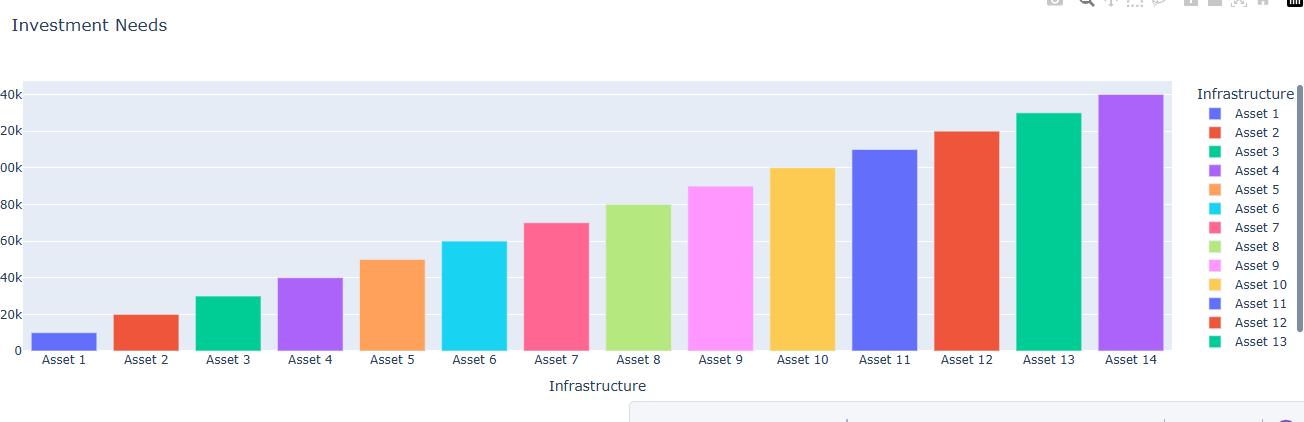
Critical infrastructure assets support essential economic, social, public-health and national-security functions, yet categorical designation alone does not indicate the degree of criticality of individual assets or provide a consistent basis for prioritization. This study presents the Criticality Quantification Assessment Framework (CQAF) and the Mathematical Quantification of Critical Infrastructure Assets Model (MQCIAM), an original integrated approach for assessing, computing, classifying and comparing infrastructure asset criticality. The framework organizes eight conceptual dimensions: geographic and population scope, impact severity, economic impact, dependency and interdependency, public confidence and societal impact, national-security impact, recovery time, and availability of alternatives. Empirical assessment is informed by a 109-item questionnaire, with responses measured on a five-point Likert scale and translated into factor values through the model's assessment procedures. MQCIAM combines normalized factor scores and model-defined weights to produce a criticality index. The index is interpreted through four bands: Negligible (0.00–0.25), Low (0.26–0.55), Moderate (0.56–0.75) and High (0.76–1.00). A Python-based proof-of-concept application operationalizes the workflow, enabling asset-level computation, comparison and recalculation when updated values are entered into the CSV dataset. A supplied fourteen-sector output records three High, two Moderate, seven Low and two Negligible sectors. Industrial and Manufacturing has the highest normalized score (1.0000), while Health Services has the lowest (0.0000) within that dataset. The contribution is an integrated and dynamically updateable criticality assessment and decision-support process; the reported software demonstration should not be mistaken for independent national-scale validation
References
Almaleh, A., & Tipper, D. (2022). Risk-based criticality assessment for smart critical infrastructures. Infrastructures, 7(1), Article 3. https://doi.org/10.3390/infrastructures7010003
Ed-daoui, I., Itmi, M., El Hami, A., Hmina, N., & Mazri, T. (2018). A deterministic approach for systems-of-systems resilience quantification. International Journal of Critical Infrastructures, 14(1), 80–99. https://doi.org/10.1504/IJCIS.2018.10011743
Grafius, D. R., Varga, L., & Jude, S. (2020). Infrastructure interdependencies: Opportunities from complexity. Journal of Infrastructure Systems, 26(4), Article 04020036. https://doi.org/10.1061/(ASCE)IS.1943-555X.0000575
Kruse, P. M., Schmitt, H. C., & Greiving, S. (2021). Systemic criticality a new assessment concept improving the evidence basis for CI protection. Climatic Change, 165, Article 2. https://doi.org/10.1007/s10584-021-03019-x
Kulugh, V. E., Mbanaso, U. M., & Chukwudebe, G. (2022). Cybersecurity resilience maturity assessment model for critical national information infrastructure. SN Computer Science, 3(3), Article 217. https://doi.org/10.1007/s42979-022-01108-x
Mbanaso, U. M., Kulugh, V. E., Musa, H., & Aimufua, G. I. O. (2019). Conceptual framework for the assessment of the degree of dependency of critical national infrastructure on ICT in Nigeria. In 2019 15th International Conference on Electronics, Computer and Computation (ICECCO). https://doi.org/10.1109/ICECCO48375.2019.9043230
Rinaldi, S. M., Peerenboom, J. P., & Kelly, T. K. (2001). Identifying, understanding, and analyzing critical infrastructure interdependencies. IEEE Control Systems Magazine, 21(6), 11–25. https://doi.org/10.1109/37.969131
Theoharidou, M., Kotzanikolaou, P., & Gritzalis, D. (2010). A multi-layer criticality assessment methodology based on interdependencies. Computers & Security, 29(6), 643–658. https://doi.org/10.1016/j.cose.2010.02.003
Weir, A. M., Wilson, T. M., Bebbington, M. S., Campbell-Smart, C., Williams, J. H., & Fairclough, R. (2024). Quantifying systemic vulnerability of interdependent critical infrastructure networks: A case study for volcanic hazards. International Journal of Disaster Risk Reduction, 114, Article 104997. https://doi.org/10.1016/j.ijdrr.2024.104997
Downloads
Published
Issue
Section
Categories
License
Copyright (c) 2026 Yashen Akas, Uche M Mbanaso

This work is licensed under a Creative Commons Attribution 4.0 International License.