Investigating the Effects of Cybercrime on Money Laundering and Terrorism Financing in Nigeria
DOI:
https://doi.org/10.33003/fjs-2026-1024-6610Keywords:
Cybercrime, Money Laundering, Terrorism Financing, Virtual Assets, Nigeria, West AfricaAbstract
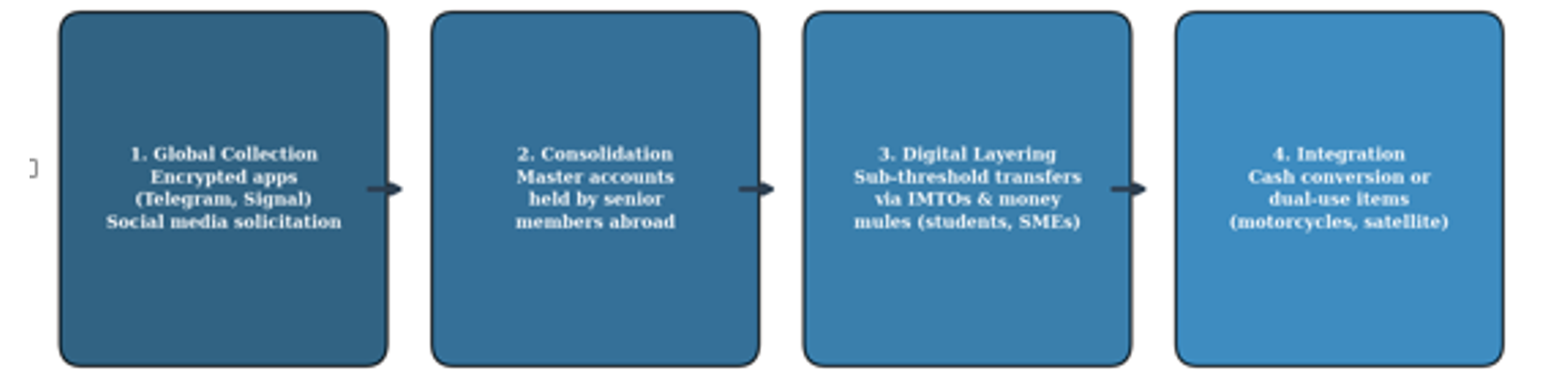
The rapid expansion of internet connectivity in West Africa has increased opportunities for cybercrime, which can generate illicit proceeds that may subsequently enter money-laundering circuits or support terrorism financing. This study examines the relationship between cybercrime, money laundering and terrorism financing in Nigeria within the broader West African context. The investigation relies on secondary data and a doctrinal review of legal frameworks. It draws on publicly available reports issued by the Inter-Governmental Action Group against Money Laundering in West Africa (GIABA), the Nigerian Financial Intelligence Unit (NFIU), the United Nations Office on Drugs and Crime (UNODC) and related bodies, together with a purposive selection of 52 case typologies previously identified in those institutional sources. Regional evidence indicates that advance fee fraud accounts for approximately 40 per cent of documented cyber-enabled cases, while Nigerian assessments for 2025 highlight the prominence of romance scams and investment fraud. Institutional materials also describe multi-phase digital funding patterns associated with certain terrorist groups and point to vulnerabilities linked to virtual-asset service providers, weak know-your-customer controls and identity-masking practices. The national response is constrained by limited inter-agency interoperability. Because the analysis is based on secondary sources, it cannot independently quantify the share of terrorist funds derived from cybercrime; the findings therefore remain descriptive and risk-oriented rather than causal. Policy implications centre on improved intelligence sharing, strengthened asset recovery and clearer regulatory oversight of digital financial channels.
References
Alabi, L. M., Agbu, D. A., & Adesina, S. T. O. (2025). The role of EFCC and related institutions in the prosecution of cybercrimes in Nigeria. International Review of Law and Jurisprudence, 7(3), 129–139.
Egmont Group. (2025). Annual report 2024–2025. Egmont Group of Financial Intelligence Units.
Institute for Financial Integrity. (2023). Cyber-enabled fraud. Institute for Financial Integrity.
Inter-Governmental Action Group against Money Laundering in West Africa. (2010). GIABA report: Threat assessment of money laundering and terrorist financing in West Africa. GIABA.
Inter-Governmental Action Group against Money Laundering in West Africa. (2022a). 2022 annual report. GIABA.
Inter-Governmental Action Group against Money Laundering in West Africa. (2022b). Typologies of money laundering and terrorist financing linked to cybercrime in West Africa. GIABA.
Inter-Governmental Action Group against Money Laundering in West Africa. (2023). Annual report 2023. GIABA.
Nigerian Financial Intelligence Unit. (2022). 2020–2022 annual report compendium and National Inherent Risk Assessment. NFIU.
Nigerian Financial Intelligence Unit. (2025). 2025 annual report. NFIU.
Søgaard Clausen, C. C. (2024). Crypto laundering on the dark web: Characteristics and modus operandi [Master’s thesis, Malmö University]. DiVA Portal.
Suchi, P. M., & Wika, P. N. (2021). Cybercrime and terrorism financing: Nigeria’s potential vulnerabilities and policy options. International Journal of Research and Innovation in Social Science, 5(7), 420–427.
The Nation. (2024, May 16). Yahoo boys bringing shame to Nigeria – EFCC Chairman. The Nation.
U.S. Department of the Treasury. (2026). 2026 national money laundering risk assessment. U.S. Department of the Treasury.
United Nations Office on Drugs and Crime. (2025). Cybercrime assessment – Nigeria 2025. UNODC.
Downloads
Published
Issue
Section
Categories
License
Copyright (c) 2026 Victor Uneojo Akuboh, Lasisi Monsuru, Oliver Aniebonam, Saifulahi Shitu, Amina Adebola, Catherine Abimuku, Badamasi Musa, Cecilia Ogheneovo, Ejima Innocent

This work is licensed under a Creative Commons Attribution 4.0 International License.