
In Silico Assessment of Gongronema Latifolium Fruit Metabolites as Potential Multi-Target Antidiabetic Leads using Network Pharmacology and Molecular Docking
DOI:
https://doi.org/10.33003/fjs-2026-1024-6321Keywords:
Gongronema latifolium, network pharmacology, molecular docking, type 2 diabetes mellitus, AKT1, GAPDHAbstract
Background: Type 2 diabetes mellitus (T2DM) is a multifactorial disease for which single-target drugs are often inadequate. The fruit of Gongronema latifolium is used in traditional Nigerian medicine, but its metabolites and molecular targets are poorly described.
Methods: Metabolites previously identified from the fruit were screened against Lipinski's rule of five and, in SwissADME, for gastrointestinal absorption and drug-likeness. Their targets were predicted and intersected with T2DM-associated genes, a protein–protein interaction network was analysed to identify hub genes, and Gene Ontology and KEGG enrichment was performed. The retained metabolites were docked against two hub targets, AKT1 and GAPDH.
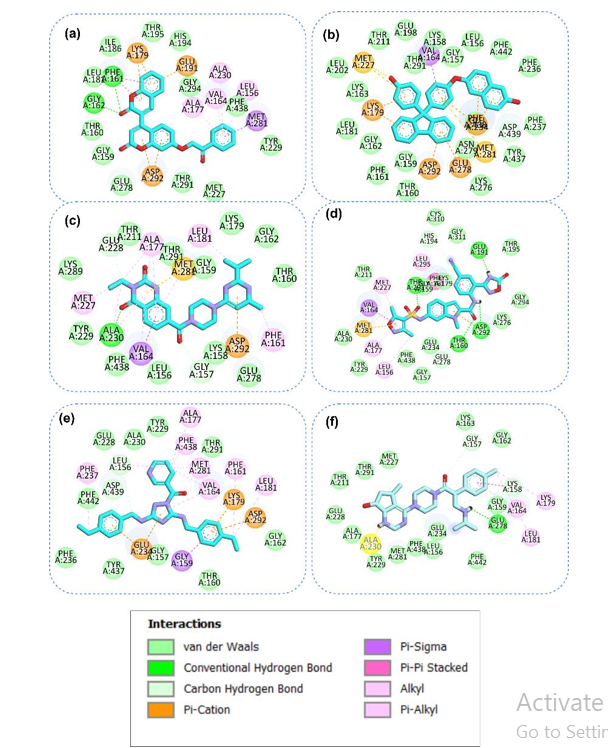
Results: Of 251 metabolites that satisfied Lipinski's rule of five, 241 were retained after SwissADME screening. A total of 1561 targets were identified for the G. latifolium fruit compounds and 6,392 genes were associated with type 2 diabetes mellitus, of which 1,028 overlapped and were taken forward as common targets. Network analysis identified 25 hub genes, led by GAPDH, AKT1, TP53, INS and TNF. The best docking score for AKT1 was −11.9 kcal/mol, with −9.4 kcal/mol being the score for the co-crystallised ligand; for GAPDH, it was −9.7 kcal/mol, while the co-crystallised ligand had a score of −7.0 kcal/mol. Twenty metabolites outscored both references, and C20 and C513 ranked highly for both targets.
Conclusion: Metabolites of G. latifolium fruit are predicted to engage several T2DM-relevant targets, notably insulin-signalling and inflammatory nodes, supporting the traditional use of the fruit and prioritising candidates for in vitro and in vivo validation.
References
Accili, D., Deng, Z., & Liu, Q. (2025). Insulin resistance in type 2 diabetes mellitus. Nature Reviews Endocrinology, 21, 413–426. https://doi.org/10.1038/s41574-025-01114-y
Adisakwattana, S. (2017). Cinnamic acid and its derivatives: Mechanisms for prevention and management of diabetes and its complications. Nutrients, 9(2), 163.
Amberger, J. S., Bocchini, C. A., Scott, A. F., & Hamosh, A. (2019). OMIM.org: Leveraging knowledge across phenotype–gene relationships. Nucleic Acids Research, 47(D1), D1038–D1043. https://doi.org/10.1093/nar/gky1151
Amrelia. (2022). Nutritive and medicinal value of Gongronema latifolium. Journal of Natural Products Discovery, 1(2). https://doi.org/10.24377/jnpd.article751
Berman, H. M., Westbrook, J., Feng, Z., Gilliland, G., Bhat, T. N., Weissig, H., Shindyalov, I. N., & Bourne, P. E. (2000). The Protein Data Bank. Nucleic Acids Research, 28(1), 235–242. https://doi.org/10.1093/nar/28.1.235
Beshel, J. A., Palacios, J., Beshel, F. N., Nku, C. O., Owu, D. U., Nwokocha, M., Bórquez, J., Simirgiotis, M. J., & Nwokocha, C. R. (2025). In silico molecular docking study and antihypertensive property of Gongronema latifolium Benth. ethanol leaf extract in dexamethasone-induced hypertension in Wistar rats. Phytomedicine Plus, 5(4), 100892. https://doi.org/10.1016/j.phyplu.2025.100892
Brownlee, M. (2005). The pathobiology of diabetic complications: A unifying mechanism. Diabetes, 54(6), 1615–1625.
Canarelli, S. E., Swalm, B. M., Larson, E. T., Morrison, M. J., & Weerapana, E. (2022). Monitoring GAPDH activity and inhibition with cysteine-reactive chemical probes. RSC Chemical Biology, 3(7), 972–982. https://doi.org/10.1039/d2cb00091a
Chin, C.-H., Chen, S.-H., Wu, H.-H., Ho, C.-W., Ko, M.-T., & Lin, C.-Y. (2014). cytoHubba: Identifying hub objects and sub-networks from complex interactome. BMC Systems Biology, 8(Suppl 4), S11. https://doi.org/10.1186/1752-0509-8-S4-S11
Daina, A., Michielin, O., & Zoete, V. (2017). SwissADME: A free web tool to evaluate pharmacokinetics, drug-likeness and medicinal chemistry friendliness of small molecules. Scientific Reports, 7, 42717. https://doi.org/10.1038/srep42717
Daina, A., Michielin, O., & Zoete, V. (2019). SwissTargetPrediction: Updated data and new features for efficient prediction of protein targets of small molecules. Nucleic Acids Research, 47(W1), W357–W364. https://doi.org/10.1093/nar/gkz382
Dallakyan, S., & Olson, A. J. (2015). Small-molecule library screening by docking with PyRx. Methods in Molecular Biology, 1263, 243–250. https://doi.org/10.1007/978-1-4939-2269-7_19
Donath, M. Y., & Shoelson, S. E. (2011). Type 2 diabetes as an inflammatory disease. Nature Reviews Immunology, 11(2), 98–107.
Gao, J., He, X., Ma, Y., Zhao, X., Hou, X., Hao, E., Deng, J., & Bai, G. (2018). Chlorogenic acid targeting of the AKT PH domain activates AKT/GSK3β/FOXO1 signaling and improves glucose metabolism. Nutrients, 10(10), 1366. https://doi.org/10.3390/nu10101366
Ge, S. X., Jung, D., & Yao, R. (2020). ShinyGO: A graphical gene-set enrichment tool for animals and plants. Bioinformatics, 36(8), 2628–2629. https://doi.org/10.1093/bioinformatics/btz931
Genitsaridi, I., Salpea, P., Salim, A., Sajjadi, S. F., Tomic, D., James, S., … (2026). 11th edition of the IDF Diabetes Atlas: Global, regional, and national diabetes prevalence estimates for 2024 and projections for 2050. The Lancet Diabetes & Endocrinology, 14, 149–156. https://doi.org/10.1016/s2213-8587(25)00299-2
Gyebi, G. A., Afolabi, S. O., Ogunyemi, O. M., Ibrahim, I. M., Olorundare, O. E., Adebayo, J. O., & Koketsu, M. (2024). Apoptotic potential of iloneoside from Gongronema latifolium Benth against prostate cancer cells using in vitro and in silico approach. Cell Biochemistry and Biophysics. https://doi.org/10.1007/s12013-024-01507-2
Huang, X., Liu, G., Guo, J., & Su, Z. (2018). The PI3K/AKT pathway in obesity and type 2 diabetes. International Journal of Biological Sciences, 14(11), 1483–1496. https://doi.org/10.7150/ijbs.27173
Jamshidi, S., Eghbalian, A., Shojaei, S., Taherkhani, A., & Feizi-Dehnayebi, M. (2025). Flavonoids as promising Akt1 inhibitors in cancer medicine: Insights from molecular docking, dynamics, DFT calculations, and in vitro validation. Cancer Reports, 8(8), e70315. https://doi.org/10.1002/cnr2.70315
Jiao, X., Jin, X., Ma, Y., Yang, Y., Li, J., Liang, L., Liu, R., & Li, Z. (2021). A comprehensive application: Molecular docking and network pharmacology for the prediction of bioactive constituents and elucidation of mechanisms of action in component-based Chinese medicine. Computational Biology and Chemistry, 90, 107402.
Kim, S., Chen, J., Cheng, T., Gindulyte, A., He, J., He, S., Li, Q., Shoemaker, B. A., Thiessen, P. A., Yu, B., Zaslavsky, L., Zhang, J., & Bolton, E. E. (2025). PubChem 2025 update. Nucleic Acids Research, 53(D1), D1516–D1525. https://doi.org/10.1093/nar/gkae1059
Kochetova, O. V., Shangareeva, Z. A., Avsaleydiniva, D. S., Viktorova, T. V., & Korytina, G. F. (2024). The role of the AKT1 gene in the pathogenesis of type 2 diabetes mellitus and its complications. Molekulyarnaya Meditsina, 22(3), 57–64.
Lipinski, C. A., Lombardo, F., Dominy, B. W., & Feeney, P. J. (2001). Experimental and computational approaches to estimate solubility and permeability in drug discovery and development settings. Advanced Drug Delivery Reviews, 46(1–3), 3–26. https://doi.org/10.1016/s0169-409x(00)00129-0
Mahmoud, V. L., Shayesteh, R., Loh, T. K. F. Y., Chan, S. W., Sethi, G., Burgess, K., Lee, S. H., Wong, W. F., & Looi, C. Y. (2024). Comprehensive review of opportunities and challenges of ethnomedicinal plants for managing type 2 diabetes. Heliyon, 10, e39699. https://doi.org/10.1016/j.heliyon.2024.e39699
Młynarska, E., Czarnik, W., Dzieża, N., Jędraszak, W., Majchrowicz, G., Prusinowski, F., Stabrawa, M., Rysz, J., & Franczyk, B. (2025). Type 2 diabetes mellitus: New pathogenetic mechanisms, treatment and the most important complications. International Journal of Molecular Sciences, 26(3), Article 1094. https://doi.org/10.3390/ijms26031094
O'Boyle, N. M., Banck, M., James, C. A., Morley, C., Vandermeersch, T., & Hutchison, G. R. (2011). Open Babel: An open chemical toolbox. Journal of Cheminformatics, 3, 33. https://doi.org/10.1186/1758-2946-3-33
Ogunyemi, O. M., Gyebi, G. A., Saheed, A., Paul, J., Nwaneri-Chidozie, V., Olorundare, O., … (2022). Inhibition mechanism of alpha-amylase, a diabetes target, by a steroidal pregnane and pregnane glycosides derived from Gongronema latifolium Benth. Frontiers in Molecular Biosciences, 9, 866719. https://doi.org/10.3389/fmolb.2022.866719
Ojo, O. A., Gyebi, G. A., Iyobhebhe, M., Dada, S., Daramola, T., Ojo, A. B., … (2026). Deciphering the mechanisms underlying the dual-target inhibition of carbohydrate-digesting and neurodegenerative enzymes by Syzygium aromaticum (L.) Merr. & L.M. via molecular docking and dynamics simulations. Scientific Reports, 16. https://doi.org/10.1038/s41598-026-45482-5
Ojo, O. A., Ogunlakin, A. D., Ajayi-Odoko, O. A., Gyebi, G. A., Ayokunle, D. I., Olanrewaju, A. A., … (2025). Bioprospection of indigenous herbal formulations for diabetes care: In vitro, network pharmacology, and molecular dynamics studies. BMC Complementary Medicine and Therapies, 25, 225. https://doi.org/10.1186/s12906-025-04980-1
Okochi, C., Asogwa, K., Ezenwelu, C., Nwolisah, O., & Ehichanya, C. (2024). Comparative proximate, phytochemical composition and antioxidant activity on aqueous extract of Gongronema latifolium fruit and leaf. The Bioscientist, 12.
Ononamadu, C. J., & Seidel, V. (2024). Exploring the antidiabetic potential of Salvia officinalis using network pharmacology, molecular docking and ADME/drug-likeness predictions. Plants, 13(20), Article 2892. https://doi.org/10.3390/plants13202892
Ononamadu, C. J., Ben Ahmed, Z., & Seidel, V. (2025). Network pharmacology, molecular docking and molecular dynamics studies to predict the molecular targets and mechanisms of action of Melissa officinalis phytoconstituents in type-2 diabetes mellitus. Plants, 14(18), Article 2828. https://doi.org/10.3390/plants14182828
Paggi, J. M., Pandit, A., & Dror, R. O. (2024). The art and science of molecular docking. Annual Review of Biochemistry, 93. https://doi.org/10.1146/annurev-biochem-030222-120000
Panossian, A. (2025). Trends and pitfalls in the progress of network pharmacology research on natural products. Pharmaceuticals, 18(4), Article 538. https://doi.org/10.3390/ph18040538
Piñero, J., Ramírez-Anguita, J. M., Saüch-Pitarch, J., Ronzano, F., Centeno, E., Sanz, F., … (2020). The DisGeNET knowledge platform for disease genomics: 2019 update. Nucleic Acids Research, 48(D1), D845–D855. https://doi.org/10.1093/nar/gkz1021
Rappaport, N., Twik, M., Plaschkes, I., Nudel, R., Iny Stein, T., Levitt, J., … (2017). MalaCards: An amalgamated human disease compendium with diverse clinical and genetic annotation and structured search. Nucleic Acids Research, 45(D1), D877–D887. https://doi.org/10.1093/nar/gkw1012
Rappé, A. K., Casewit, C. J., Colwell, K. S., Goddard, W. A., III, & Skiff, W. M. (1992). UFF, a full periodic table force field for molecular mechanics and molecular dynamics simulations. Journal of the American Chemical Society, 114(25), 10024–10035. https://doi.org/10.1021/ja00051a040
Rohm, T. V., Meier, D. T., Olefsky, J. M., & Donath, M. Y. (2022). Inflammation in obesity, diabetes, and related disorders. Immunity, 55(1), 31–55. https://doi.org/10.1016/j.immuni.2021.12.013
Shannon, P., Markiel, A., Ozier, O., Baliga, N. S., Wang, J. T., Ramage, D., … (2003). Cytoscape: A software environment for integrated models of biomolecular interaction networks. Genome Research, 13(11), 2498–2504. https://doi.org/10.1101/gr.1239303
Szklarczyk, D., Nastou, K., Koutrouli, M., Kirsch, R., Mehryary, F., Hachilif, R., Hu, D., Peluso, M. E., Huang, Q., Fang, T., Doncheva, N. T., Pyysalo, S., Bork, P., Jensen, L. J., & von Mering, C. (2025). The STRING database in 2025: Protein networks with directionality of regulation. Nucleic Acids Research, 53(D1), D730–D737. https://doi.org/10.1093/nar/gkae1113
Trott, O., & Olson, A. J. (2010). AutoDock Vina: Improving the speed and accuracy of docking with a new scoring function, efficient optimization, and multithreading. Journal of Computational Chemistry, 31(2), 455–461. https://doi.org/10.1002/jcc.21334
Wang, X., Shen, Y., Wang, S., Li, S., Zhang, W., Liu, X., … (2017). PharmMapper 2017 update: A web server for potential drug target identification with a comprehensive target pharmacophore database. Nucleic Acids Research, 45(W1), W356–W360. https://doi.org/10.1093/nar/gkx374
Yu, M., Zhu, S., Huang, D., Tao, X., & Li, Y. (2024). Inhibition of starch digestion by phenolic acids with a cinnamic acid backbone: Structural requirements for the inhibition of α-amylase and α-glucosidase. Food Chemistry, 435, 137499.
Zi, C., Wang, D., Gao, Y., & He, L. (2022). The role of Th17 cells in endocrine organs: Involvement of the gut, adipose tissue, liver and bone. Frontiers in Immunology, 13, 1104943. https://doi.org/10.3389/fimmu.2022.1104943
Zubair, M. S., Yuyun, Y., Musnina, W. S., Najib, A., Nainu, F., Arba, M., Paneo, D. R., Praditapuspa, E. N., & Maulana, S. (2025). Network pharmacology and molecular docking studies of ethnopharmacological plants from Sulawesi as antidiabetics. Tropical Journal of Natural Product Research, 9(3). https://doi.org/10.26538/tjnpr/v9i3.30
Downloads
Published
Issue
Section
Categories
License
Copyright (c) 2026 Victoria Temitope Makanjuola, Gideon Ampoma Gyebi, Chinenye Florence Ogah

This work is licensed under a Creative Commons Attribution 4.0 International License.


